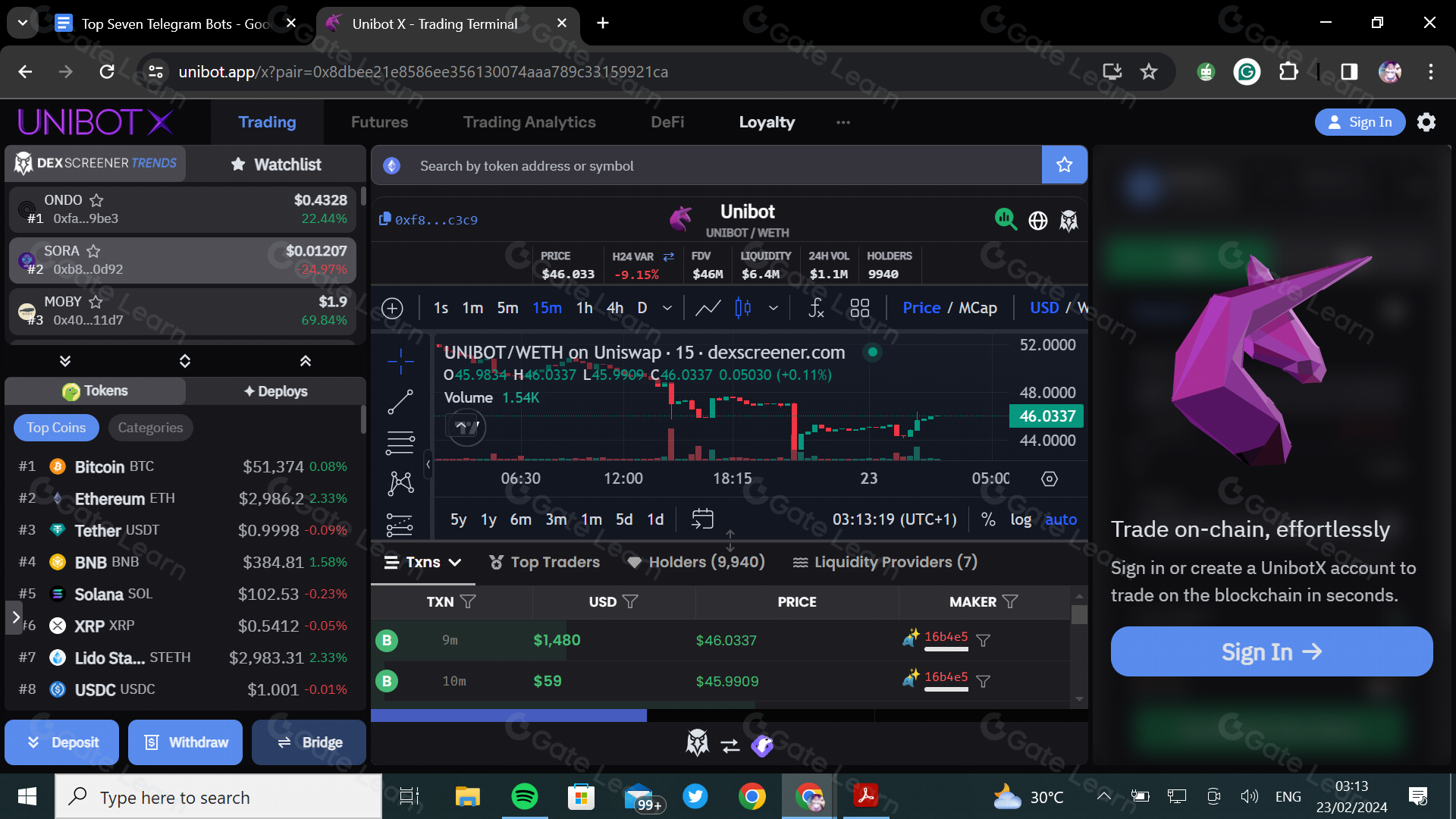
The rise of telegram trading bots analysis
Telegram trading bots have evolved from simple alert services into critical infrastructure layers for decentralized finance. They are no longer just tools for notification; they are complex execution engines that handle order routing, liquidity provision, and automated strategy deployment in real-time. This shift has fundamentally changed how traders interact with on-chain markets, particularly on high-speed networks like Solana.
The demand for these bots is driven by the need for speed and reliability. In an environment where slippage and front-running can erase profits in milliseconds, a direct-to-chain execution path via Telegram offers a significant advantage over traditional web interfaces. Users can deploy limit orders, set stop-losses, and manage portfolios without ever leaving the chat app, effectively turning their phone into a professional trading terminal.
Market data confirms this migration. Based on lifetime trading volume, the top Telegram trading bots—including Trojan, BONKbot, Maestro, Banana Gun, and SolTradingBot—have processed billions in transaction value. This volume isn't just about user growth; it represents a structural change in how liquidity is accessed and managed. Traders are moving away from fragmented web dashboards toward unified, bot-driven workflows that prioritize execution efficiency.
This infrastructure layer also supports advanced automation features like copy trading and dollar-cost averaging (DCA). These functions allow users to maintain exposure to volatile assets without being constantly online. The bot monitors the market, executes trades based on predefined parameters, and manages risk, effectively acting as a 24/7 trading assistant. As the DeFi landscape becomes more competitive, the reliability and speed of these Telegram-based engines will likely determine which traders can consistently capture alpha.
The Technical Backbone of Speed
Telegram trading bots don't just chat; they execute. The difference between a standard wallet and a bot often comes down to infrastructure. While you are waiting for a transaction to confirm on the public blockchain, bots are already using private channels to get ahead of the queue.
RPC Nodes and Private Mempools
Speed in crypto trading is largely about visibility. Public mempool data is shared and often delayed, giving bots a significant advantage. Advanced bots connect to private RPC (Remote Procedure Call) nodes. These nodes allow bots to see transactions before they are broadcast to the entire network.
By accessing private mempools, bots can spot incoming trades and front-run or arbitrage opportunities. This infrastructure layer is what enables sub-second execution, a feat impossible for standard retail wallets relying on public block explorers.
Smart Contract Interactions
Once a trade is identified, the bot interacts directly with smart contracts. Instead of going through a user interface like a DEX frontend, bots send raw transaction data. This direct interaction reduces latency and allows for complex strategies, such as splitting large orders or executing multi-step arbitrage, in a single atomic transaction.
This technical setup is critical for high-frequency strategies where milliseconds determine profit or loss.
Execution Models: Sniping, Copying, and Automation
Manual trading is limited by human reaction time and attention span. Telegram bots remove these bottlenecks by executing logic at the speed of the network block, not the speed of a mouse click. The infrastructure allows for strategies that are physically impossible for a retail trader to replicate consistently.
Sniping and Front-Running
Sniping bots monitor the mempool for new liquidity additions or token launches. They submit transactions with higher gas fees to ensure their order is processed in the same block as the liquidity event. This isn't just "fast" trading; it is infrastructure-level positioning. If a bot detects a new pool creation, it can buy in the very first block, often before the token even appears on a standard exchange interface.
Copy Trading Infrastructure
Copy trading bots function as a mirror for your wallet. When the "master" wallet executes a trade, the bot detects the on-chain transaction and immediately replicates it in your connected wallet. This shifts the burden of analysis from execution to selection. You are no longer trading the chart; you are trading the judgment of another trader. The bot handles the slippage settings, gas limits, and timing, ensuring you enter the position at the same price point or better.
Automated Dollar-Cost Averaging (DCA)
For long-term accumulation, DCA bots remove emotional decision-making. You set a fixed interval (e.g., every 4 hours) and a fixed amount (e.g., 0.1 ETH). The bot executes the trade regardless of market conditions. This is particularly useful for volatile assets where timing the bottom is futile. As noted in industry analyses, these automation options allow users to maintain exposure without needing to be online or awake, turning sporadic attention into consistent exposure.
Comparing Top Telegram Trading Bots
The Telegram trading bot landscape is dominated by a handful of players that have proven their reliability through lifetime volume. According to CoinGecko, the top five bots by volume are Trojan, BONKbot, Maestro, Banana Gun, and SolTradingBot [src-serp-7]. These tools have moved beyond simple execution engines to become full-fledged trading terminals within the chat interface.
Choosing the right bot depends on your primary chain and risk tolerance. Trojan and BONKbot lead the Solana ecosystem with speed, while Maestro offers broader multi-chain support. The table below breaks down the core infrastructure differences that matter during high-volatility events.
| Bot | Primary Chains | Fee Structure | Key Feature |
|---|---|---|---|
| Trojan | Solana, Base | 0.5% - 1% | High-speed execution & anti-rug |
| BONKbot | Solana | 0.5% - 1% | Low latency & simple UI |
| Maestro | ETH, BSC, Solana | 0.5% - 2% | Multi-chain & copy trading |
| Banana Gun | ETH, BSC | 0.5% - 1.5% | MEV protection & sniping |
| SolTradingBot | Solana | 0.5% - 1% | Basic DCA & limit orders |
Speed is the primary currency in this space. Trojan and BONKbot are frequently cited for their ability to execute trades in milliseconds, a critical advantage when trading new Solana launches. Maestro, while slightly slower on single-chain execution, compensates with robust multi-chain infrastructure and advanced copy-trading features that allow users to mirror successful wallets automatically.
Security risks and operational safety
Telegram trading bots automate execution, but they also centralize risk. When you connect a bot to an exchange or a decentralized wallet, you are handing over keys or permissions that can be exploited if the infrastructure fails. The convenience of 24/7 trading means your capital is exposed even when you are asleep, making security hygiene non-negotiable.
Private key management and burner wallets
Never connect your primary holding wallet to a trading bot. Use a dedicated "burner" wallet with only the funds you intend to trade. This limits the blast radius if the bot’s API keys are compromised or if the service itself is breached. For exchange-connected bots, use API keys with "trade-only" permissions and disable withdrawals entirely. This ensures that even if a key is stolen, the attacker cannot drain your main balance.
Smart contract and scam vectors
On decentralized networks, bots often require token approvals to trade on your behalf. Malicious contracts can exploit these permissions to drain assets. Always review smart contract interactions before signing. Be wary of bots promising guaranteed returns or requiring excessive permissions; these are common vectors for rug pulls and phishing attacks. Stick to open-source, audited bots from reputable developers to minimize exposure to hidden malicious code.
Technical context
The volatility of assets traded by these bots underscores the need for strict risk management. A sudden market move can trigger automated liquidations if stop-losses are not configured correctly.
No comments yet. Be the first to share your thoughts!