Why Telegram bots dominate DeFi execution
DeFi trading has shifted from browser-based dashboards to direct messaging interfaces, with Telegram bots becoming the primary execution layer for serious traders. The appeal is straightforward: speed and simplicity. By interacting with a bot through a chat window, users bypass the latency of loading heavy web interfaces, approving transactions in pop-ups, and navigating complex menus. This direct command-line approach allows traders to act on market movements in seconds rather than minutes, a critical advantage in high-volatility environments.
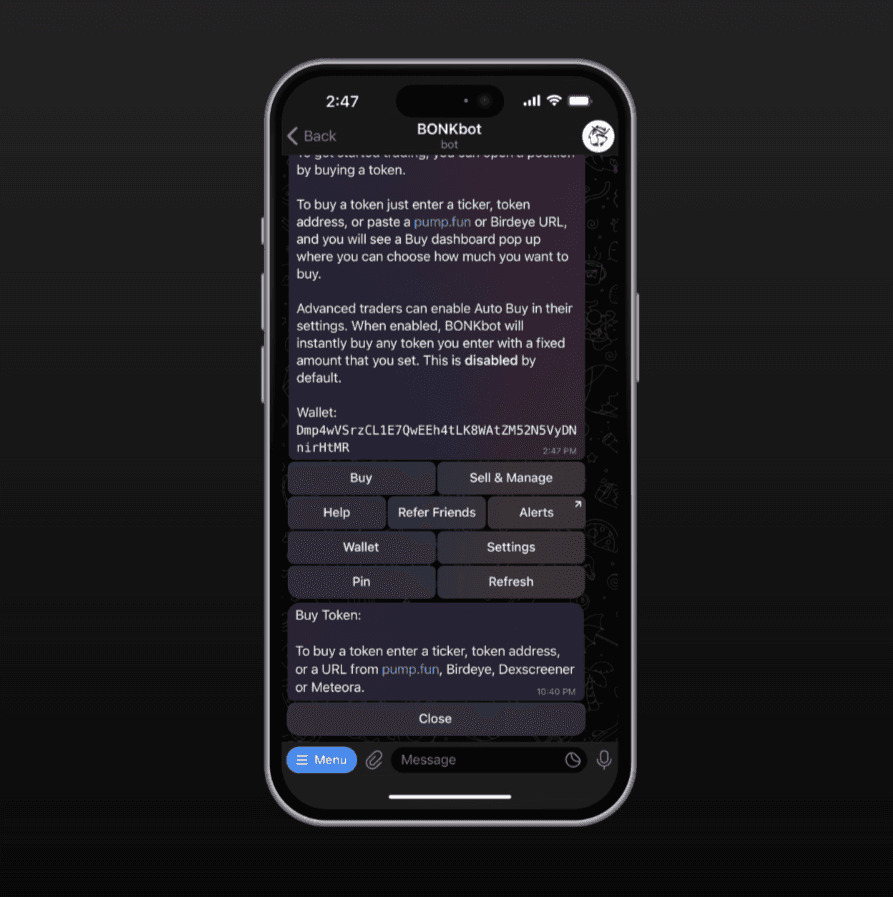
The primary use case for these bots is rapid execution, particularly for "sniping" new token launches or reacting to sudden price swings. When a new liquidity pool opens, web UIs often struggle to process transactions quickly enough to secure a favorable entry. Telegram bots, running on optimized servers, can broadcast buy orders almost instantly after a block is mined. This speed advantage is why platforms like Trojan on Solana and BONKbot have seen massive trading volumes, as traders prioritize execution latency over interface polish.
However, this convenience comes with significant risk. Because the bot holds your private keys or wallet connection to execute trades, you are entrusting a third-party service with the keys to your financial assets. A single bug in the bot’s code, a compromised server, or a malicious update can lead to total loss of funds. Unlike a web wallet where you manually sign each transaction, a bot can be configured to auto-approve trades, meaning a single erroneous command can drain your account before you realize the mistake.
The dominance of Telegram bots is not just about convenience; it is a response to the technical limitations of current DeFi frontends. As trading becomes more competitive, the ability to execute trades with minimal friction becomes a decisive factor. Traders are willing to accept the security risks because the cost of missing a trade or entering too late often outweighs the potential loss from a bot failure. Understanding this trade-off is essential before connecting any wallet to a Telegram service.
Compare top bots for your chain
Selecting the right Telegram trading bot requires matching the software to your primary blockchain. Solana, Ethereum, and Base each have distinct ecosystem demands, fee structures, and security risks. A bot optimized for Solana’s speed may lack the deep liquidity integrations required for Ethereum’s complex DeFi landscape.
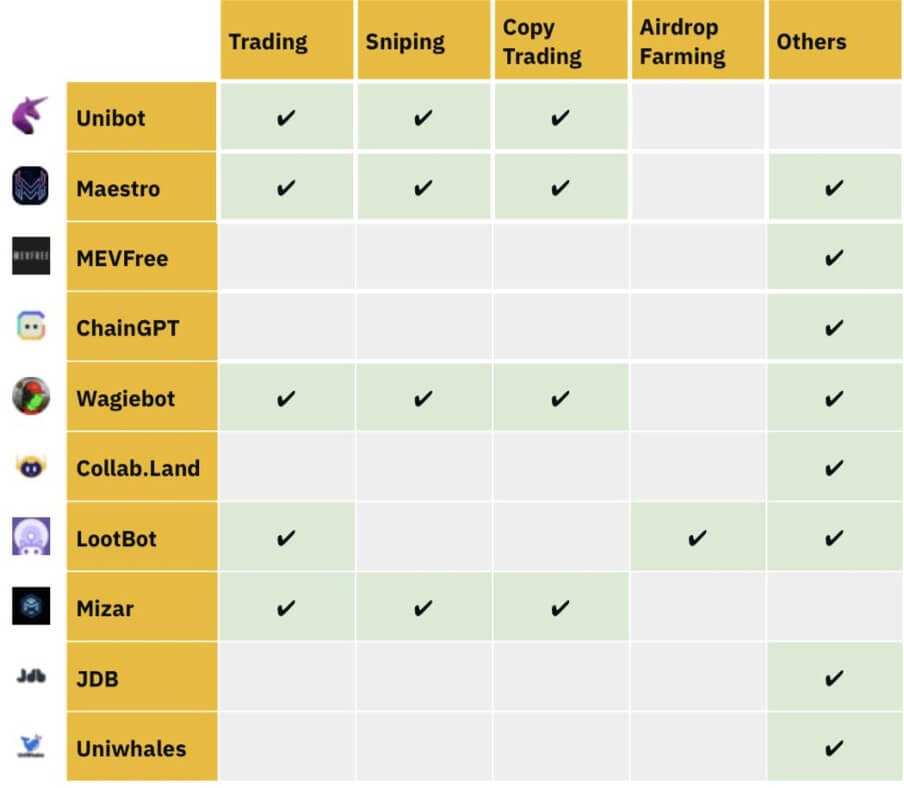
The following comparison highlights the most reliable tools across these chains, focusing on transaction speed, fee models, and specialized features like anti-rug protection. Choose the tool that aligns with your specific execution strategy, whether that is sniping new launches or copying whale wallets.
| Bot | Supported Chains | Fee Structure | Key Features |
|---|---|---|---|
| Trojan | Solana | ~1% per trade | Fast execution, limit orders, anti-rug |
| Maestro | ETH, BSC, SOL, Base | Subscription + % fee | Copy trading, multi-chain support |
| Banana Gun | ETH, BSC | ~1% per trade | Sniping, anti-rug, MEV protection |
| BONKbot | Solana | ~1% per trade | Simple interface, high speed |
| Unibot | ETH, BSC | ~1% per trade | Copy trading, PnL tracking |
For Solana traders, Trojan and BONKbot dominate due to their speed and simplicity. They are designed for high-frequency sniping and quick entries. If you operate across multiple chains, Maestro offers broader compatibility but requires a subscription. Always verify the official source for any bot before connecting your wallet to mitigate security risks.
Set up your bot securely
Setting up a Telegram trading bot is a technical process that requires careful configuration. A single misstep in API key management or wallet connection can lead to irreversible fund loss. Follow these steps to establish a secure foundation before executing any trades.

Open Telegram and search for @BotFather. Send the /newbot command and follow the prompts to name your bot. Once created, BotFather will provide an API Token. Store this token immediately. This token is the primary key to controlling your bot; if it is exposed, anyone can hijack your bot.
Navigate to your chosen exchange’s API settings (e.g., Binance, OKX) to generate new API keys. You must restrict permissions to "Read" and "Trade" only. Never enable "Withdrawal" permissions. Copy the API Key and Secret Key into your bot’s configuration panel. Treat these credentials like bank passwords; do not share them in public channels or logs.
Link your exchange account to the bot. Most bots require you to input the API credentials securely within their interface. Verify that the bot is connected to the correct exchange network. If the bot supports direct wallet integration, ensure you are using a dedicated hot wallet with limited funds, not your primary cold storage.

Before deploying real capital, run a simulation. Most reputable bots offer a paper-trading mode. Execute several test trades to verify that order execution, slippage settings, and stop-loss triggers are functioning as intended. This step is non-negotiable for identifying configuration errors without financial risk.

Once testing is complete, enable live trading. Start with a minimal position size to confirm real-time execution. Configure maximum daily loss limits and maximum trade size limits immediately. These safeguards act as circuit breakers, preventing a single error or market anomaly from draining your account.
Warning: Never grant withdrawal permissions to a trading bot API key. This is the most common vector for total account compromise. If a bot requires withdrawal access, it is inherently unsafe for automated trading.
For detailed technical instructions on building and securing your bot, refer to official documentation from providers like Privy.
Configure risk controls and fees
Your trading bot is only as safe as its configuration. Without strict parameters, automated execution can drain your wallet in seconds during high volatility. You must define hard limits for slippage, gas, and transaction safety before placing capital at risk.
Set slippage and gas limits
Slippage tolerance determines the maximum price movement you accept before a trade fails. For stablecoin swaps, keep this between 0.5% and 1%. For new, volatile tokens, you may need 5–10% to ensure execution, but this exposes you to significant price impact. Always set a maximum slippage cap to prevent front-running attacks.
Gas limits (priority fees) determine how quickly your transaction is processed. During network congestion, low gas fees result in failed transactions or missed entries. Configure your bot to use dynamic gas pricing based on current network conditions. Do not rely on static gas values, as they become obsolete within minutes during market spikes.
Enable anti-rug protection
Anti-rug protection filters out tokens with high sell pressure or suspicious liquidity patterns. Configure filters to block trades where the top 10 holders own more than 20–30% of the supply. This prevents you from buying into tokens designed to dump on early buyers.
Additionally, enable transaction simulation if your bot supports it. This feature previews the trade outcome before signing, catching potential errors or malicious contract interactions. Never trade without this layer of verification on unverified contracts.
Pre-trade security checklist
Before executing any automated strategy, verify these critical settings to prevent irreversible loss:
-
Slippage set to 0.5%–1% for stablecoins, max 10% for volatile assets
-
Gas limit enabled with dynamic priority fee
-
Anti-rug filter active for top 10 holder concentration
-
Transaction simulation turned on for new contracts
-
Wallet permissions restricted to only necessary token approvals
Review these parameters weekly. Market conditions change, and a configuration that worked last week may be dangerous today. Treat your bot settings as active risk management tools, not static preferences.
Avoid common setup mistakes
Telegram trading bots offer speed, but they also amplify risk. A single configuration error can expose your entire wallet to theft. Treat every setup step as a security audit, not a formality.
Grant Limited Token Permissions
Never approve unlimited token spending allowances. When you connect your wallet to a bot, you are granting it permission to move assets on your behalf. If you set the allowance to "unlimited," a compromised bot or a malicious contract can drain your wallet completely.
Instead, approve only the exact amount of tokens you intend to trade. If a bot requires higher permissions for a specific feature, review the smart contract code or seek verified audits before proceeding. Revoke unused approvals regularly using tools like Revoke.cash to minimize your attack surface.
Use Verified RPC Endpoints
Default RPC endpoints are often unreliable or insecure. Using a public, unverified endpoint can lead to failed transactions, front-running, or data interception. Always configure your bot to use a private, high-availability RPC provider.
Select providers that offer dedicated nodes and robust security features. This ensures your transactions are processed quickly and privately, reducing the risk of manipulation. Never hardcode sensitive keys in plain text; use environment variables or secure vaults to store API credentials.
Frequently asked questions about Telegram trading bots
These questions address the most common concerns regarding efficacy, costs, and bot selection based on current market data.
No comments yet. Be the first to share your thoughts!