Choose your bot framework
Your infrastructure starts with the framework that powers the bot. You have three main paths: a managed wallet provider, a dedicated developer platform, or a fully custom build. Your choice depends on how much security overhead you want to manage yourself versus how much control you need over the code.
Managed wallets (Privy)
Privy abstracts away private key management. It uses smart wallets and account abstraction to handle security, meaning you don't store keys in your server environment. This reduces the attack surface significantly. Privy also offers specific recipes for Telegram bots, allowing users to trade via natural language commands while keeping custody secure. This is the safest option for teams that want to launch quickly without building custom security infrastructure.
Developer platforms (Coinbase CDP)
The Coinbase Developer Platform (CDP) provides a structured SDK for building automated strategies. It is designed for developers who want more control over the execution logic than a managed wallet offers but still want access to reliable node infrastructure. The CDP handles the blockchain interaction layer, letting you focus on the trading algorithm. It is ideal if you are building complex strategies that require precise control over transaction signing and submission.
Custom infrastructure
A custom build gives you total control but requires you to manage every security aspect. You are responsible for key storage, node reliability, and anti-fraud measures. This path is only recommended if you have a dedicated security team and specific compliance requirements that managed solutions cannot meet. The risk of error is highest here, as a single bug in your code can lead to total loss of funds.
Framework comparison
Use this table to compare the core differences between these options.
| Framework | Security Model | Customization | Best For |
|---|---|---|---|
| Privy | Smart Wallets / Account Abstraction | Moderate | Quick launch, non-custodial security |
| Coinbase CDP | SDK-managed keys | High | Complex trading algorithms |
| Custom | Self-managed | Full | Enterprise compliance, unique needs |
Set up the execution environment
Your Telegram trading bot is only as secure and fast as the server it runs on. A misconfigured backend exposes your private keys and introduces latency that can cost you trades. We will build a secure, low-latency environment by isolating the infrastructure, securing key management, and optimizing network paths.
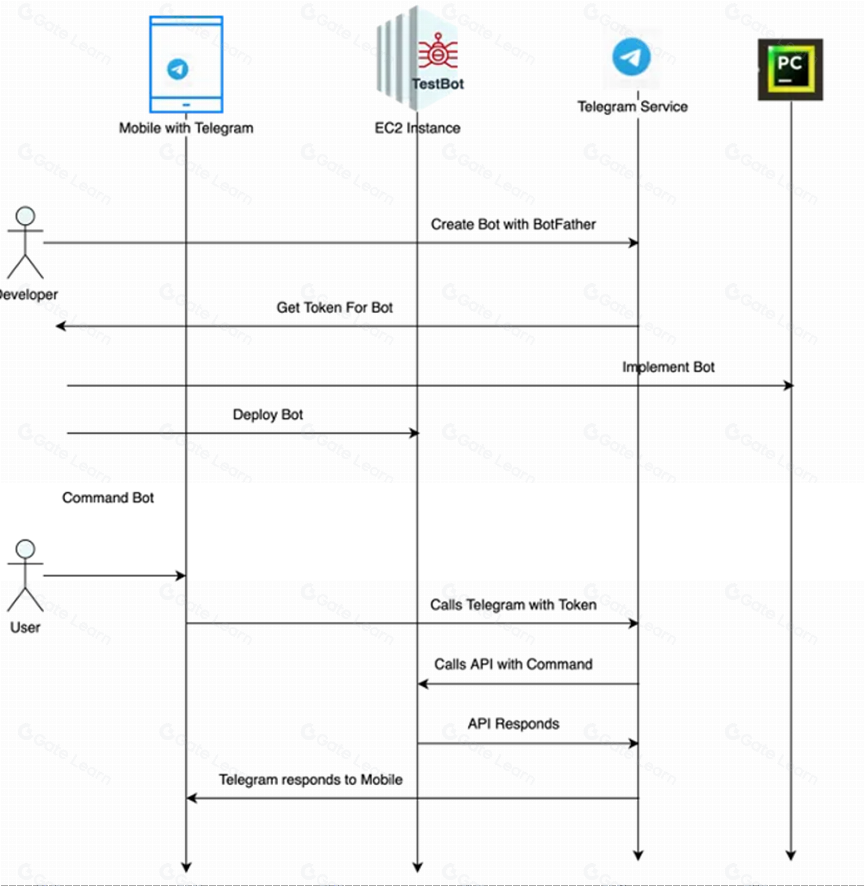
Choose a Virtual Private Server (VPS) located in the same data center as your blockchain’s primary RPC endpoint. Proximity reduces network hops, which is critical for time-sensitive trades. Avoid shared hosting or local machines for production; a dedicated VPS ensures consistent resource allocation and isolates your bot from other users’ noise.

Install a lightweight Linux distribution (like Ubuntu Server) and set up a non-root user with SSH key authentication. Disable password logins to prevent brute-force attacks. Install your language runtime (e.g., Node.js or Python) and use a process manager like PM2 or Systemd to keep the bot alive during restarts. This creates a stable, headless foundation that runs reliably 24/7.

Never store private keys or API secrets in plain text files or environment variables on the disk. Use a dedicated secrets manager like HashiCorp Vault or AWS Secrets Manager. Your bot should fetch keys at runtime via a secure API call. If you must use local files, encrypt them using a hardware security module (HSM) or a trusted execution environment. This ensures that even if the server is compromised, your keys remain unreadable.
Connect to a high-performance, private RPC node rather than a public one. Public nodes rate-limit requests and can be slow during market volatility. Use a dedicated provider like QuickNode or Alchemy with a private endpoint. Configure your bot to use WebSocket connections for real-time block updates, which are faster than HTTP polling. This reduces the time between a block event and your trade execution.
Once the environment is stable, you can move to connecting the bot to the blockchain. The infrastructure you’ve built ensures that your trades are executed with minimal latency and maximum security.
Configure security and access controls
Telegram trading bots offer a convenient way to buy and sell tokens by pasting contract addresses into a chat, but that convenience introduces significant risks. Because these bots often automate complex actions like copy trading or liquidity sniping, they require deep access to your wallet. Without strict security controls, you are exposing your assets to both smart contract vulnerabilities and custodial hacks.
The first step is to isolate your trading activity. Never connect your primary wallet or "cold storage" to a Telegram bot. Instead, use a dedicated hot wallet funded only with the amount you are willing to lose. This limits the blast radius if the bot’s smart contract is malicious or if the bot itself is compromised.
Next, implement strict access controls within the Telegram environment. Most bots allow you to whitelist specific user IDs or chat IDs. Ensure that only your personal account has administrative privileges. If the bot supports two-factor authentication (2FA) or IP whitelisting, enable it immediately. This prevents unauthorized users from triggering trades or draining funds even if they gain access to your Telegram session.
Finally, audit the smart contracts the bot interacts with. Since Telegram bots often execute trades on decentralized exchanges, they rely on external code. Use tools like Etherscan to verify the contract address and check for known vulnerabilities. If the bot uses a new or unverified contract, assume it is risky. Prioritize bots that use established, audited protocols to minimize the chance of interacting with a honeypot or rug pull contract.
Test trades with small amounts
Before you connect real capital to your Telegram trading bot infrastructure, you must validate the entire pipeline with minimal funds. This step is non-negotiable for high-stakes environments. A bug in your order routing, a misconfigured API key, or a latency spike can turn a minor coding error into a significant financial loss within seconds.
Treat this phase as a dry run for your system’s integrity, not just its functionality. You are testing whether the bot correctly interprets market signals, submits orders to the exchange, and reports back to your Telegram chat without hallucinating data or duplicating requests.
The Pre-Launch Validation Checklist
Use this checklist to ensure every critical component is verified before scaling up:
-
API Key Permissions: Confirm keys have trade-only access; never grant withdrawal permissions.
-
Order Execution: Verify that limit and market orders execute at the expected price points.
-
Error Handling: Trigger a simulated error (e.g., invalid ticker) to ensure the bot logs it and stops trading safely.
-
Telegram Connectivity: Ensure notifications for trades, errors, and status updates arrive instantly and accurately.
-
Rate Limit Compliance: Check that your bot respects exchange API rate limits to avoid temporary bans.
Why Small Amounts Matter
Testing with small amounts isolates risk. If your bot has a logic flaw that causes it to buy at $100 instead of $10, losing $10 is a lesson. Losing $10,000 is a disaster. This approach allows you to identify edge cases—such as how the bot handles partial fills or network timeouts—without jeopardizing your portfolio.
As noted by official security guidelines from Privy and Coinbase Docs, automated trading systems carry inherent custodial and smart contract risks. Validating your infrastructure with minimal capital is the primary defense against these risks. It ensures that when you do scale, your bot behaves predictably under real market conditions.
Monitor performance and adjust
A bot running in the dark is a liability. You need to see exactly how your strategy performs in live market conditions to catch drift, slippage, or security anomalies before they drain your wallet. Treat this as an ongoing audit rather than a one-time setup.
1. Log every trade execution
Record the timestamp, token, price, and gas fees for every transaction. This data is your baseline for calculating win rates and identifying which pairs are actually profitable. Without granular logs, you are trading blind. Use a local database or a dedicated logging service to store these events securely, ensuring you can trace any loss back to a specific command or market condition.
2. Compare against benchmarks
Don't just look at your PnL; compare your bot's returns against a passive hold strategy for the same tokens. If your bot is trading frequently but underperforming a simple buy-and-hold, the transaction costs and slippage are likely eating your profits. This comparison highlights whether your automation adds value or just adds noise and risk.
3. Set up real-time alerts
Configure alerts for large drawdowns, unusual trading volumes, or failed transactions. If the bot executes a trade outside your predefined parameters, you need to know immediately. This allows you to pause the bot and investigate potential security breaches or logic errors before they compound. Prioritize alerts that trigger on security events, such as unexpected token approvals or wallet interactions.
4. Iterate on strategy parameters
Use the data from your logs to refine your entry and exit thresholds. If you notice the bot is getting stopped out by minor volatility, widen your stop-loss slightly. If it’s missing rallies due to slow execution, consider optimizing your RPC endpoint or switching to a faster network. Small, data-driven adjustments are safer than sweeping changes to your codebase.
No comments yet. Be the first to share your thoughts!