The infrastructure reality of Telegram trading bots
Telegram trading bots operate as a bridge between chat interfaces and blockchain execution, but this convenience introduces distinct infrastructure constraints. Unlike dedicated web interfaces, Telegram bots must relay commands through Telegram’s servers before reaching your wallet or exchange API. This relay adds latency, which can be critical during high-volatility events where milliseconds determine slippage outcomes.
Security is the second major constraint. Because bots require access to your private keys or API keys to execute trades, they become high-value targets for interception or malicious code injection. The "bot-first" architecture, where users interact with their wallet directly within Telegram, simplifies onboarding but centralizes risk. If the bot provider’s infrastructure is compromised, your funds are exposed. This is why reputable providers often use non-custodial models, where the bot only signs transactions locally on your device rather than holding keys on a central server.
Execution speed is also limited by Telegram’s rate limits and message parsing overhead. While some bots claim sub-second trade execution, the actual time includes the round-trip to Telegram’s servers, the bot’s processing time, and the blockchain confirmation time. For high-frequency trading, this added layer is often a bottleneck. However, for spot trading or slower DeFi strategies, the tradeoff between ease of use and speed is often acceptable.
Before integrating any Telegram trading bot, verify its source code or audit status. Look for providers that publish their infrastructure details and security practices. Avoid bots that promise unrealistic returns or require excessive permissions. The goal is to find a balance between usability and security, ensuring that the bot serves your trading strategy without introducing unnecessary risk.
Telegram trading bots choices that change the plan
Choosing a Telegram trading bot requires balancing speed, security, and cost. These tools are not generic wallets; they are specialized execution engines that prioritize latency over custody. The right choice depends on whether you value MEV protection, multi-chain support, or a simple interface for high-frequency trading.
Speed and MEV Protection
Execution speed is the primary advantage of Telegram bots. They bypass the slippage and front-running risks common on standard decentralized exchanges by connecting directly to mempool nodes. However, not all bots offer robust protection against Maximum Extractable Value (MEV) attacks. Some bots route transactions through private relays to hide order details, while others rely on public mempool visibility, leaving you vulnerable to sandwich attacks. Evaluate the bot’s transaction routing architecture before committing significant capital.
Security and Key Management
Security models vary significantly between bot providers. Some operate as custodial services where you deposit funds into a shared pool, while others use non-custodial setups where you retain control of your private keys. Custodial models offer convenience but introduce counterparty risk. Non-custodial models require you to manage your own wallet security, often using a hot wallet integrated into the Telegram interface. Always review the bot’s audit history and smart contract verification status.
Fees and Liquidity
Trading fees on Telegram bots typically range from 0.1% to 1% per transaction, which is higher than standard DEX swaps but often justified by the speed premium. Some bots charge a fixed monthly subscription for premium features like faster execution or advanced charting. Others offer free tiers with slower execution speeds. Consider the total cost of ownership, including gas fees and potential slippage losses, when comparing bot pricing structures.
Comparison Table
The following table compares key features of leading Telegram trading bots based on current market data.
| Bot Name | Supported Chains | Security Model | Typical Fee | MEV Protection |
|---|---|---|---|---|
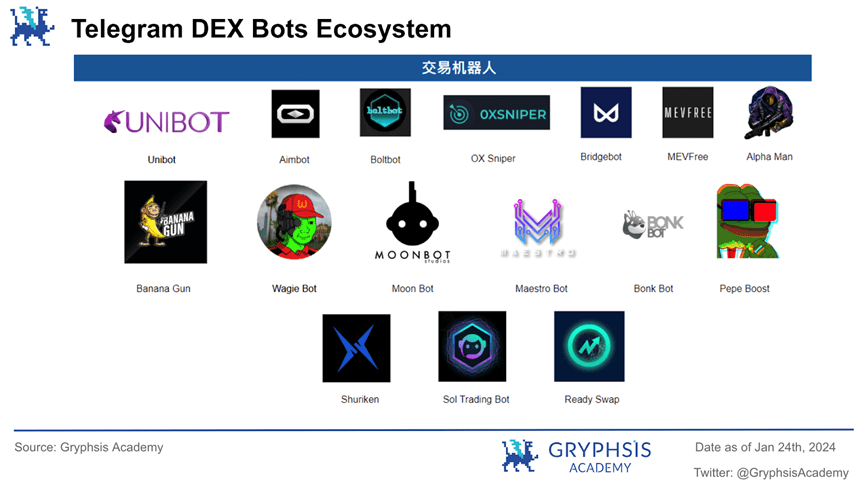
| Trojan | Solana | Non-custodial | 0.5-1% | Yes |
| Maestro | EVM, Solana | Custodial/Non-custodial | 0.5-2% | Optional |
| Banana Gun | EVM | Non-custodial | 0.5-1% | Yes |
| BONKbot | Solana | Non-custodial | 0.5% | No |
| SolTradingBot | Solana | Non-custodial | 0.5% | No |
Market Context
Trading activity in these bots often correlates with broader market volatility. Monitoring asset prices and technical trends can help you time your entries and exits more effectively.
Choosing the right Telegram trading bot
Selecting a Telegram trading bot requires balancing speed, security, and cost. Unlike standard exchange interfaces, these bots execute trades directly from chat commands, offering latency advantages in volatile markets. However, this convenience introduces specific risks regarding key management and smart contract permissions.
When evaluating options, prioritize bots that support non-custodial wallet integration. This ensures you retain control of your private keys, reducing the attack surface for exchange hacks. Review the bot’s smart contract interactions carefully; reputable bots use audited interfaces that limit transaction scope to prevent unauthorized fund drains.
For traders needing dedicated hardware for running bot infrastructure or secure key storage, consider the following equipment:



As an Amazon Associate, we may earn from qualifying purchases.
The decision ultimately rests on your trading frequency and risk tolerance. High-frequency traders may accept higher fees for faster execution, while long-term holders should prioritize security features over speed.
Avoiding Weak Options and Misleading Claims
Many Telegram trading bots rely on weak infrastructure that fails under market stress. Relying on unverified smart contract integrations or opaque execution layers exposes traders to significant risk. Before committing capital, verify that the bot uses direct RPC connections or reputable aggregators rather than third-party relayers that can introduce latency or slippage.
The most common mistake is ignoring the security model. Bots that require full wallet private keys or unrestricted token approvals are dangerous. Look for solutions that use limited allowances or non-custodial signing methods. Always check if the bot’s code is open-source or audited by a recognized firm. If a bot promises guaranteed profits or hides its fee structure, it is likely a weak option.
Another area of concern is execution speed. In fast-moving DeFi markets, a delay of even a few seconds can mean the difference between profit and loss. Ensure the bot operates on low-latency nodes and has transparent performance metrics. Avoid bots that claim instant execution without disclosing their backend infrastructure.
While Telegram bots can earn money through various means, such as paid services or subscriptions, this does not guarantee profitability for the end user. The primary goal should be secure and efficient trading, not just accessibility. Focus on bots that provide clear documentation, responsive support, and a track record of reliable performance. Prioritize security and execution quality over flashy interfaces or unverified claims.
Telegram trading bots: what to check next
Do Telegram trading bots earn money?
Telegram trading bots do not earn money for the user automatically; they are execution tools, not income generators. The bots themselves generate revenue by charging subscription fees or transaction spreads to their users. For traders, the bot’s value lies in speed and automation, allowing you to execute trades faster than manual clicking, but the profit depends entirely on your trading strategy and market conditions.
Are Telegram trading bots safe to use?
Using a Telegram trading bot introduces significant security risks, primarily because most require you to share your private wallet keys or grant high-level spending approvals. If the bot developer is malicious or if the service is compromised, your funds can be drained instantly. Always use a dedicated wallet with only the capital you are willing to lose, and never store your primary holdings or long-term assets in a wallet connected to a third-party bot.
Can I use Telegram bots on any blockchain?
Most popular Telegram trading bots are designed for specific ecosystems, particularly Solana and Ethereum-based networks like Base or BNB Chain. You cannot use a Solana-focused bot to trade Ethereum tokens. Before subscribing, verify that the bot supports the specific blockchain and token standard you intend to trade. Many bots also support multiple chains, but you must configure the correct network within the bot’s settings to avoid failed transactions.
How much do Telegram trading bots cost?
Pricing models vary widely, ranging from completely free tiers with basic features to premium subscriptions costing $50 to $100 per month. Some bots operate on a "pay-per-swap" model, taking a small percentage of each transaction as a fee. Free versions often lack critical features like anti-rug protection, MEV resistance, or copy-trading capabilities, so weigh the cost against the advanced security tools you need for active trading.
No comments yet. Be the first to share your thoughts!