Choose your execution engine
Selecting the right Telegram trading bot infrastructure depends on your specific trading style and technical comfort. You are choosing an execution engine that will handle your capital, balancing speed, security, and chain compatibility.
Sniping vs. General Swaps
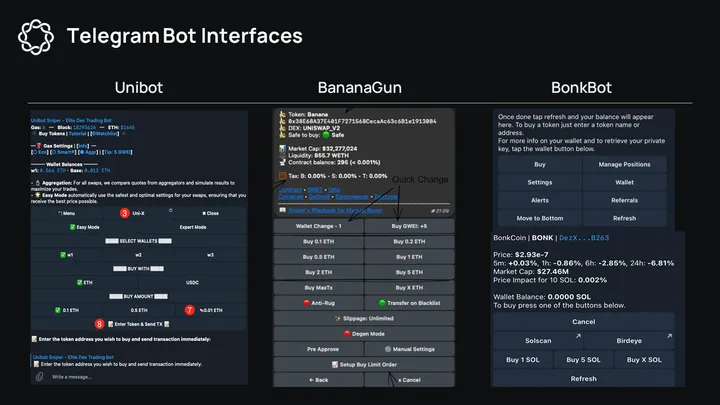
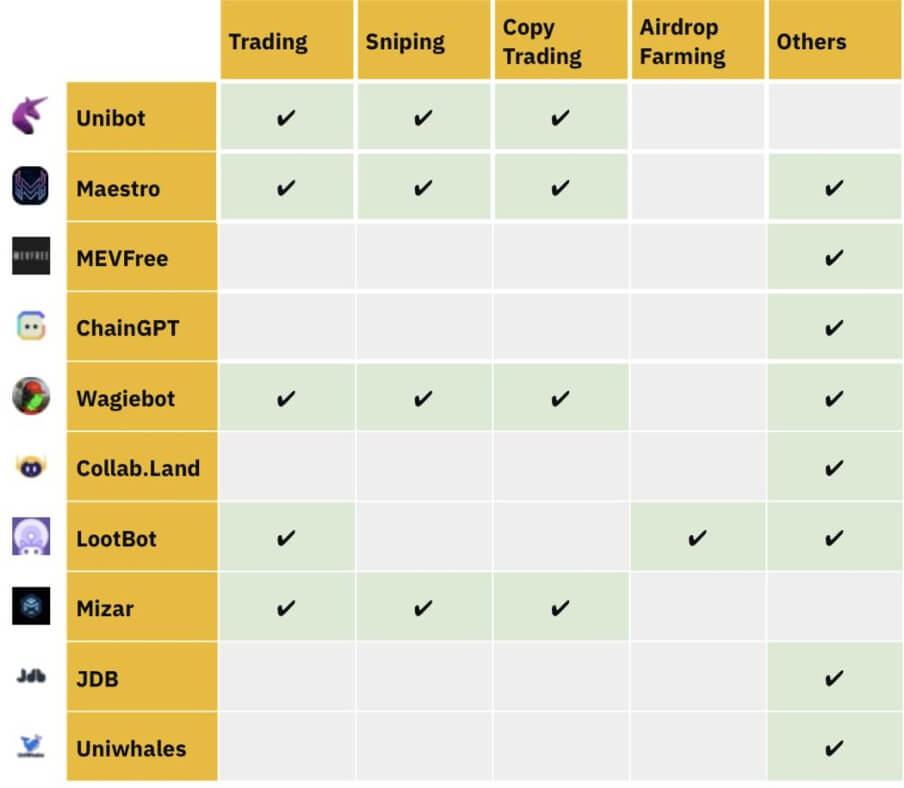
If your goal is sniping—buying tokens the second they list on a decentralized exchange (DEX)—you need an engine with low latency and direct RPC connections. Standard bots often rely on public nodes, introducing delays that can cost you the trade. Specialized sniping engines connect directly to mempool watchers or private node providers to catch new liquidity.
For general swaps and copy trading, reliability matters more than microsecond speed. You need a bot that supports multiple chains (like Solana, Base, or Ethereum) and offers robust slippage protection. These engines prioritize uptime and user interface over raw execution speed.
Compare Top Execution Engines
The table below compares three common types of Telegram trading infrastructure based on their technical characteristics.
| Engine Type | Latency | Supported Chains | Fee Structure |
|---|---|---|---|
| Sniper Engine | <100ms | Solana, Base, BSC | High (0.5-1% + gas) |
| DEX Aggregator Bot | 2-5 seconds | Multi-chain (EVM + Solana) | Low (0.1-0.3% + gas) |
| Copy Trading Bot | 5-15 seconds | Solana, Ethereum | Medium (0.5-1% + gas) |
Security and Technical Skill
Your technical skill level should dictate your choice. Sniping engines often require you to manage private keys locally or use complex wallet connect flows. They offer the most control but carry the highest risk if you misconfigure slippage or approval settings.
General swap bots typically offer a more guided experience with built-in security checks. They are better for traders who want to execute trades quickly without worrying about the underlying RPC infrastructure. Always verify that the bot you choose uses official, audited smart contracts or requires minimal token approvals.

Hardware Support
Running a high-frequency trading bot locally or managing multiple VPS instances for different chains requires reliable hardware. Ensure your infrastructure can handle the network load without dropping connections during high volatility.


As an Amazon Associate, we may earn from qualifying purchases.
Secure your wallet and private keys
High-stakes trading leaves no room for error. A single compromised private key can drain your entire portfolio in seconds. To protect your capital, treat your wallet infrastructure like a bank vault: separate the assets, limit the access, and monitor the entry points.
Use a dedicated burner wallet
Never connect your main treasury or long-term holding wallet to a trading bot. Even reputable bots require API keys or private key access to execute trades. If that access is compromised—or if the bot developer goes rogue—you lose everything.
Control bot permissions strictly
When configuring your bot, you are granting it permission to sign transactions on your behalf. Most trading bots use API keys or private key exports. If you use an API key, ensure it is set to "trade-only" with no withdrawal permissions. If you must use a private key for full automation, understand that the bot has absolute control over that wallet.

Create a new, empty wallet using a trusted hardware wallet or secure software wallet. Do not reuse addresses from your main portfolio. This new address becomes your bot’s identity.
Transfer only the specific amount of capital you plan to trade with this bot. Treat this balance as disposable. If the bot is compromised, the loss is limited to this amount.
If using API keys, enable only the necessary permissions (e.g., trading, no withdrawals). If using private key injection, verify the bot’s source code or security audit before proceeding. Revoke access immediately after use.
Regularly check the wallet activity. If you suspect any unauthorized access, move remaining funds to a new secure wallet and revoke the compromised keys immediately.
Avoid sharing private keys casually
Many beginner guides suggest pasting your private key directly into a Telegram chat for the bot to read. This is extremely dangerous. Telegram stores message history, and any participant in the chat group can potentially copy your key. Always use encrypted storage or secure environment variables for key management, never plain text in chat logs.
Configure gas and slippage settings
Your bot’s speed means nothing if it fails to execute. In volatile DeFi markets, two settings dictate whether a trade lands or reverts: gas limits and slippage tolerance. Gas is the fee you pay miners or validators to process your transaction; slippage is the maximum price difference you accept between the moment you click "buy" and the moment the swap completes.
Set them too low, and your transaction gets stuck in the mempool or fails entirely. Set them too high, and you bleed value on unnecessary fees or accept a terrible entry price. Balancing these parameters is the primary technical skill in bot trading.
Set your gas strategy
Most Telegram trading bots default to "standard" gas, which is often too slow for high-volatility assets. You need to adjust this based on network congestion.
- Identify your network: Ethereum Mainnet requires careful gas management. Solana or Base may have different fee structures.
- Choose your speed: Select "Fast" or "Instant" gas during high-traffic periods. This ensures your transaction is prioritized by validators.
- Set a gas cap: Define the maximum fee you are willing to pay. This prevents runaway costs if the network suddenly spikes.
Adjust slippage tolerance
Slippage protects you from price manipulation but costs you money. If you are buying a high-volume token like USDC, a 0.5% slippage is usually sufficient. For smaller, more volatile tokens, you may need 1-2% to ensure the transaction doesn’t fail due to price movement.
- Low slippage (0.1-0.5%): Best for stablecoins or major tokens with deep liquidity. Minimizes cost but increases failure risk if volatility spikes.
- Medium slippage (0.5-1%): A safe middle ground for most altcoins. Balances cost and execution reliability.
- High slippage (1-5%+): Necessary for low-liquidity tokens or during extreme market moves. Increases the risk of "sandwich attacks" where bots front-run your trade.
Test with small amounts
Before deploying significant capital, run a test transaction. Observe how your bot handles network congestion. If trades are consistently failing, increase your gas limit. If you are consistently getting bad prices, tighten your slippage tolerance. This iterative process ensures your bot operates efficiently under real market conditions.
Test trades with small amounts first
Before you connect your Telegram trading bot to a live portfolio, verify that it executes commands correctly and handles errors gracefully. This stage is about validation, not profit. You are testing the infrastructure, not the market.
Start by deploying the bot in a testnet environment if your blockchain provider supports one. If testnets are unavailable, use a dedicated wallet with minimal funds—amounts you are comfortable losing entirely. This isolates your main assets from potential bugs in your smart contract interactions, API rate limits, or Telegram command parsing logic.
Step 1: Verify command execution
Send a test trade command through Telegram. Check the bot’s response time and the transaction hash on the blockchain explorer. Ensure the bot correctly interprets your input, including slippage tolerance and gas limits. If the bot fails to respond or sends an incorrect transaction, debug the code before proceeding.
Step 2: Test error handling
Intentionally trigger common errors. Send invalid commands, attempt trades during network congestion, or try to execute trades with insufficient balance. Your bot should catch these errors and return clear, helpful messages to the user rather than crashing or hanging. Robust error handling is critical for maintaining trust and preventing unintended losses.
Step 3: Validate security controls
Test your bot’s security features. Ensure that only authorized users can send commands by verifying the user ID checks. If you have implemented rate limiting or command whitelisting, confirm they work as expected. Unauthorized access to a trading bot can lead to rapid and irreversible financial damage.
Step 4: Monitor transaction outcomes
Watch the test transactions settle on-chain. Confirm that the funds were sent to the correct addresses and that the amounts match your expectations. If the bot uses a DEX aggregator, verify that the swap rate was applied correctly. Any discrepancy, no matter how small, indicates a bug that needs fixing.
Pre-launch validation checklist
Use this checklist to ensure your bot is ready for live trading:
-
Test commands execute without errors on testnet or with minimal funds.
-
Error messages are clear and informative for invalid inputs.
-
User authentication restricts access to authorized wallets only.
-
Transaction hashes are correctly logged and verifiable on-chain.
-
Slippage and gas settings are tested under varying network conditions.
-
Rate limiting prevents command spam or abuse.
Once you have passed all these checks, you can confidently scale up your trading operations. The initial effort to validate your bot’s functionality and security will save you from costly mistakes and potential exploits down the line.
Monitor and audit bot activity
Once your bot is live, the real work begins. You aren't just watching charts; you are watching a financial instrument that executes trades automatically. A single bug or an unauthorized command can drain a wallet in seconds. Effective monitoring requires two layers: tracking performance metrics and securing the bot against anomalies.
Track performance with on-chain data
Your bot's logs only show what it tried to do. To know what it actually achieved, you need on-chain verification. Tools like Etherscan or Solscan allow you to trace transaction hashes directly to the blockchain. This is critical because "pending" transactions can fail due to slippage or network congestion, leading to false positives in your internal logs.
Set up alerts for specific transaction outcomes. If your bot places ten trades but only three are confirmed, your margin is eroding from gas fees and failed attempts. Use a dashboard to track key metrics:
- Success Rate: The percentage of trades that confirm on-chain.
- Slippage Impact: The difference between expected and actual fill prices.
- Gas Efficiency: The average gas paid per transaction.
Detect unauthorized access and anomalies
Security is not a one-time setup; it is an ongoing audit. Telegram bots are frequent targets for phishing and command injection attacks. Unauthorized access often looks like subtle anomalies: trades executed at odd hours, unexpected token swaps, or commands sent from unknown user IDs.
Implement a strict allowlist for bot administrators. Only specific wallet addresses or Telegram user IDs should have access to sensitive commands like withdraw or set_slippage. Monitor your bot's chat logs for unusual patterns. If you see a surge in commands from a single IP or a new, unrecognized user ID, treat it as a potential breach.
Establish a routine audit schedule
Don't wait for a loss to investigate. Schedule weekly reviews of your bot's activity. Compare your internal logs against on-chain data to catch discrepancies early. If you notice a pattern of failed trades during high network congestion, adjust your gas limits or pause the bot until conditions stabilize. Regular audits turn reactive firefighting into proactive management.
Common Telegram bot security risks
Building a robust Telegram Trading Bot Infrastructure for DeFi requires a clear sequence: define the constraint, compare realistic options, test the tradeoff, and choose the path with the fewest hidden costs. This order keeps the advice usable instead of decorative.
After each step, pause to check whether the recommendation still fits the reader's actual situation. If a strategy depends on perfect timing, unusual access, or a best-case budget, include a simpler fallback.
Frequently asked questions about bot infrastructure
Setting up a Telegram trading bot involves specific technical and financial considerations. The following answers address the most common hurdles regarding setup, costs, and security.
No comments yet. Be the first to share your thoughts!