The 2026 Telegram Bot Landscape
Telegram trading bots have evolved from simple signal distributors into critical infrastructure for on-chain execution. In 2026, these bots act as lightweight brokers, allowing users to trade complex DeFi positions directly within the chat interface without navigating separate web dashboards. This shift has lowered the barrier to entry for crypto trading, integrating it seamlessly into a platform billions already use daily.
The current macro situation highlights a move away from hype toward utility. Projects are now competing on execution speed, security, and the ability to support multiple chains. As highlighted in recent industry analyses, this infrastructure layer is driving mass adoption by removing the friction typically associated with wallet connections and gas management.
However, this convenience comes with significant risk. Because these bots handle private keys and execute trades automatically, they represent a high-stakes attack surface. Users must verify that the underlying infrastructure is robust and that the bot operators maintain strict security protocols. The landscape is no longer just about who has the best features, but who can guarantee the safety of funds during high-volatility events.
Top Telegram Trading Bots Compared
The Telegram trading bot landscape in 2026 has shifted from simple copy-trading scripts to complex infrastructure connecting directly to exchange APIs and on-chain routers. Choosing the right bot requires evaluating three specific metrics: execution latency, supported blockchain networks, and built-in risk management tools. Below is a comparison of the leading platforms based on their current technical capabilities.
| Bot | Supported Chains | Risk Management | Fee Model |
|---|---|---|---|
| Unibot V2 | Ethereum, BSC, Solana | Auto-sell, Slippage caps, Anti-rug | Subscription + Spread |
| Banana Gun | Ethereum, BSC, Polygon | MEV protection, Copy-trading limits | Transaction % fee |
| Maestro Bot | Multi-chain (10+) | DCA entries, Stop-losses, TP levels | Subscription + Spread |
| GMX Sniper | Arbitrum, Avalanche | Real-time liquidation alerts | Free + Gas fees |
The table above highlights the structural differences between these platforms. Unibot V2 and Maestro rely on subscription models to fund their continuous API development, which often results in faster execution speeds during high volatility. Banana Gun, by contrast, operates on a transaction-fee model, making it cost-effective for casual traders but potentially expensive for high-frequency strategies. GMX Sniper remains niche, focusing exclusively on decentralized exchange (DEX) perpetuals on Layer 2 networks.
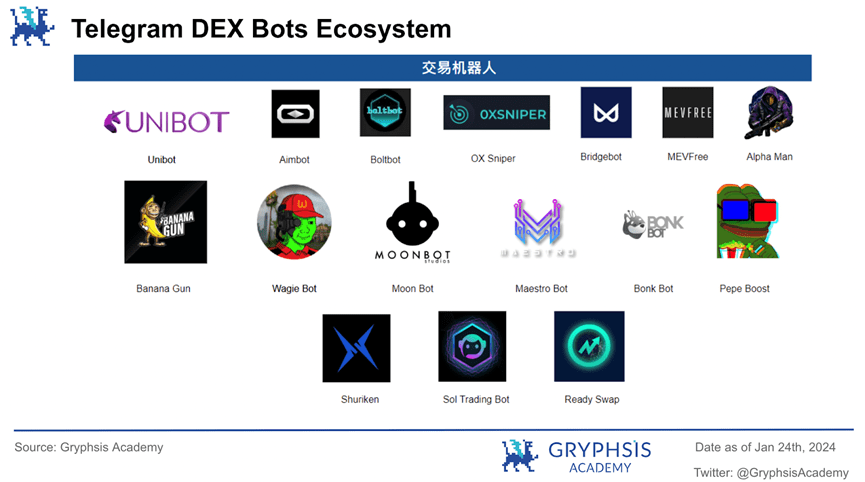
When selecting a bot, prioritize one that offers granular control over slippage and anti-rug mechanisms. In 2026, the primary risk is not market direction but contract exploits and sandwich attacks. Bots that integrate MEV protection or direct node connections provide a significant safety advantage over those relying on public RPC endpoints. Always test new bots with small amounts to verify execution reliability before committing significant capital.


As an Amazon Associate, we may earn from qualifying purchases.
Execution Risks and Security Gaps
Use this section to make the Telegram Trading Bots Analysis decision easier to compare in real life, not just on paper. Start with the reader's actual constraint, then separate must-have requirements from details that are merely nice to have. A practical choice should survive normal use, maintenance, timing, and budget. If a recommendation only works in an ideal situation, call that out plainly and give the reader a fallback path.
The simplest way to use this section is to write down the must-have criteria first, then compare each option against those criteria before weighing nice-to-have features.
Building a Reliable Bot Strategy
Automation in Telegram trading bots is powerful, but it is not a substitute for a coherent trading plan. Treat the bot as an execution engine, not a strategy generator. The infrastructure you build must support clear entry and exit rules, risk management parameters, and manual override capabilities. Without these guardrails, you are not trading—you are gambling with faster execution.
The most common failure point is over-optimization. A bot that performs flawlessly in a backtest often fails in live markets because it cannot handle slippage, liquidity gaps, or sudden volatility spikes. To mitigate this, start with a small position size and monitor the bot’s behavior against your manual trades for at least two weeks. This "shadow period" helps you identify discrepancies between expected and actual execution.
Integrate real-time data feeds to ensure your bot reacts to current market conditions. For example, using a live price widget for major assets like Bitcoin (BTC) allows you to verify that your bot’s data source is accurate and low-latency. If your bot relies on delayed or cached data, you risk executing trades at stale prices, which can lead to significant losses in fast-moving markets.
Finally, always maintain manual oversight. Set up alerts for unusual trading activity or when the bot hits predefined stop-loss limits. This ensures you can intervene quickly if something goes wrong. Remember, the goal is to enhance your trading efficiency, not to remove your judgment from the process entirely.
Common Questions About Telegram Bots
Telegram trading bots have moved from niche experiments to standard infrastructure for high-frequency crypto trading. In 2026, the question is no longer whether they work, but how they fit into a broader execution strategy.
Do Telegram trading bots actually work?
Yes, but with strict caveats. Telegram bots function as execution layers, not prediction engines. They connect to exchange APIs via WebSocket connections, allowing for sub-second order placement that manual trading cannot match. Their efficacy depends entirely on the signal source feeding them. A bot executing a verified arbitrage opportunity will work; a bot following a random influencer’s tip will lose money. Always verify that a bot uses official exchange API keys with withdrawal permissions disabled.
What is the best trading bot on Telegram?
There is no single "best" bot because utility depends on your strategy. For sniper trading (buying new tokens instantly), BonkBot and Maestro remain the dominant choices due to their low latency and support for multiple chains like Solana and Base. For institutional-grade grid trading, 3Commas or Pionex offer more robust risk management features than typical Telegram-native bots. The "best" bot is the one that supports the specific exchange and token standard you are trading.
Do Telegram bots earn money?
Bots do not earn money; they execute trades. Profitability comes from the strategy behind the bot. A well-configured bot can automate a grid strategy to capture volatility, or a sniper bot can front-run large buys. However, most users lose money because they use bots to trade poorly conceived strategies faster than they would manually. The bot amplifies both gains and losses.
What are the top 5 bots in Telegram?
- BonkBot: The current leader for Solana trading. Known for its simplicity, speed, and low fees. Ideal for beginners and high-frequency traders alike.
- Maestro: A multi-chain powerhouse supporting Ethereum, BSC, and Solana. Offers advanced features like limit orders and copy-trading.
- Unibot: One of the first major Ethereum-focused bots. Strong community and frequent updates, though occasionally faces network congestion issues.
- Trojan (formerly Unibot on Solana): A fast, reliable alternative for Solana traders, often used alongside BonkBot for redundancy.
- Wave: Gaining traction for its user-friendly interface and strong security features, particularly on the Base chain.
No comments yet. Be the first to share your thoughts!