How on-chain brokers execute trades
When you type a command like /buy into a Telegram bot, you aren’t just sending a message; you are triggering a complex chain of events that bridges social media interfaces with the blockchain. These bots function as on-chain brokers, acting as the execution layer for traders who want speed without navigating complex wallets or interfaces. Understanding this mechanism is critical, as it separates simple signal aggregators from actual trading infrastructure.
At the core of every reliable trading bot is a secure infrastructure built on RPC (Remote Procedure Call) nodes. These nodes act as the bridge between your Telegram client and the blockchain network. When you authorize a bot, it stores your wallet’s private keys—encrypted and stored securely on its backend servers. When you issue a trade command, the bot constructs a signed transaction locally using those keys and broadcasts it to the network via the RPC node. This process happens in milliseconds, allowing for execution speeds that often surpass manual trading on decentralized exchanges.
However, speed alone isn’t enough in volatile markets. Sophisticated bots integrate MEV (Maximal Extractable Value) protection to prevent front-running. Without these protections, your transaction could be intercepted by bots that see your pending trade and insert their own ahead of it, buying the asset before you and selling it back to you at a higher price. Premium infrastructure includes anti-MEV features like private transaction relays or flashbots, ensuring your trade executes at the price you saw, not a manipulated one.
This technical reality means that choosing a bot is largely a choice of infrastructure quality. The best tools don’t just relay orders; they optimize gas fees, handle slippage tolerance automatically, and maintain low-latency connections to multiple nodes. For high-stakes trading, the security of how these keys are managed and the reliability of the execution path are far more important than the user interface’s aesthetic.
Top Bots by Volume and Reliability
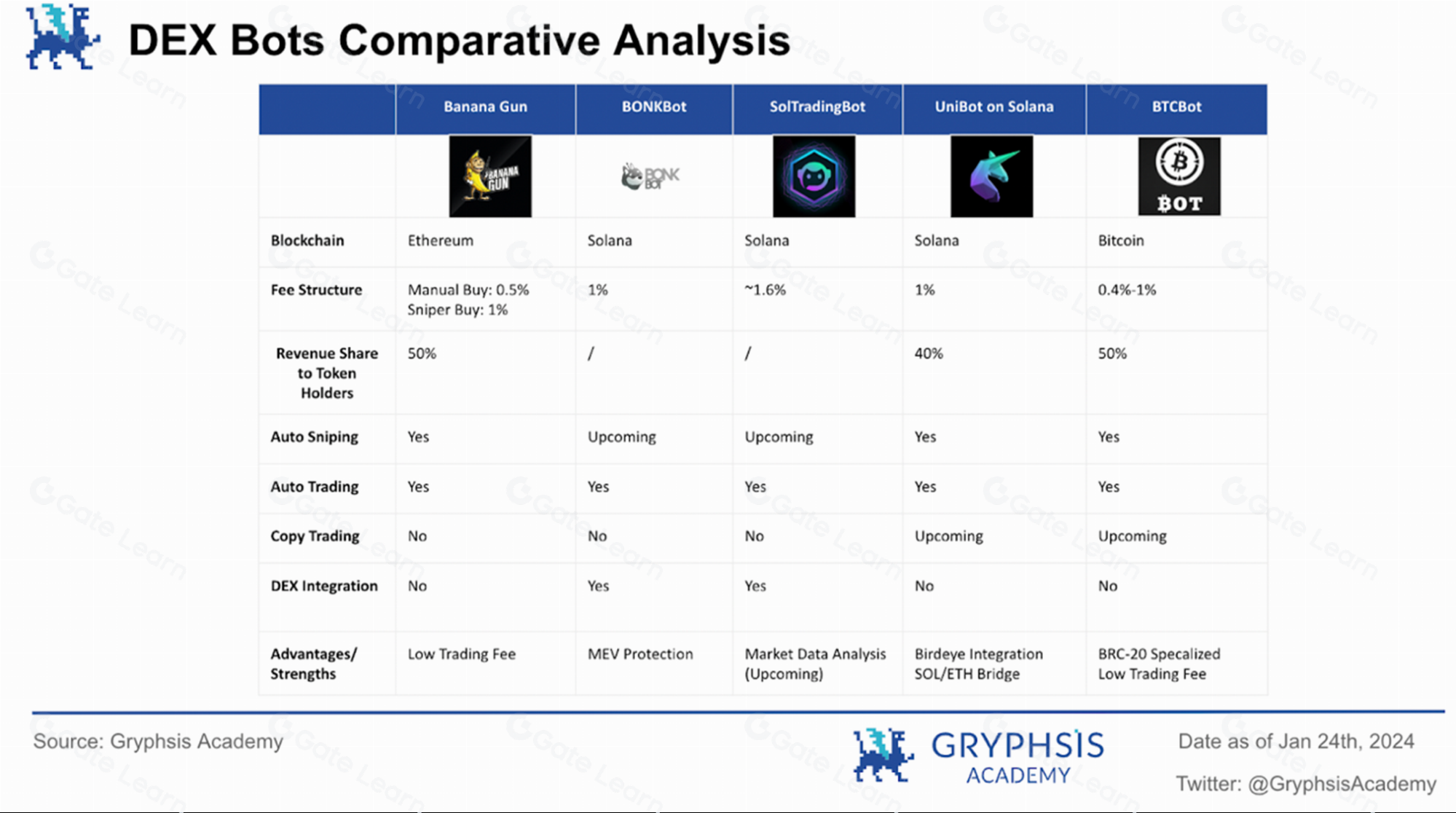
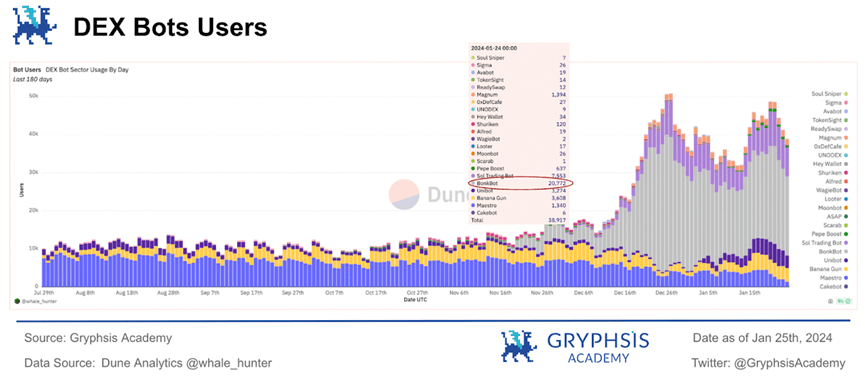
When evaluating Telegram trading bots for high-stakes execution, market volume serves as the primary indicator of infrastructure reliability. The bots below dominate the ecosystem not just by user count, but by the sheer throughput of their transaction engines. We focus on Trojan, BONKbot, Maestro, and Banana Gun, analyzing their specific strengths in chain support and fee structures.
| Bot | Primary Chains | Fee Structure | Key Strength |
|---|---|---|---|
| Trojan | Solana, Base | 0.5%–1% | Speed and reliability on Solana |
| BONKbot | Solana | 0.5% | Lowest fees for high-frequency trading |
| Maestro | EVM (BSC, ETH, Arbitrum) | 0.8%–1% | Multi-chain EVM support and advanced tools |
| Banana Gun | EVM (BSC, ETH) | 0.5%–1% | Anti-rug protection and sniping |
Trojan has established itself as the standard for Solana-based trading. Its infrastructure is optimized for the high-throughput nature of the Solana blockchain, offering consistent execution speeds even during periods of extreme network congestion. For traders prioritizing reliability on this specific chain, Trojan’s balance of speed and security makes it a top-tier choice.
BONKbot differentiates itself through cost efficiency. With a flat 0.5% fee, it appeals to high-frequency traders who execute numerous small transactions. While limited to Solana, its streamlined interface and low cost structure allow traders to preserve margins that would otherwise be eroded by higher fee percentages on other platforms.
For the Ethereum Virtual Machine (EVM) ecosystem, Maestro and Banana Gun lead the charge. Maestro provides robust multi-chain support across BSC, Ethereum, and Arbitrum, making it the go-to for traders managing diverse portfolios. Its advanced feature set includes sophisticated limit orders and portfolio tracking. Banana Gun, conversely, focuses heavily on security and sniping capabilities, particularly for new token launches on EVM chains. Its anti-rug mechanisms are designed to protect users from immediate liquidity withdrawals.
The choice between these bots often comes down to your primary chain of operation. If you are trading Solana assets, Trojan and BONKbot offer superior speed and cost efficiency. For EVM-based trading, Maestro and Banana Gun provide the necessary tools for navigating the complexities of Ethereum and its layer-2 solutions. Always verify the current fee structures and supported chains directly within the bot’s interface, as these parameters can shift with market conditions.
Security risks and key management
Trading on Telegram offers speed, but that convenience comes with a significant security tax. To execute trades directly through a bot, you must grant the application access to your private keys or API credentials. This creates a critical trade-off: you gain instant execution, but you lose the isolation that normally protects your funds from online threats.
When you connect a hot wallet, you are essentially handing over the keys to your vault to a third-party server. If the bot developer’s infrastructure is compromised, or if the developer itself is malicious, your private keys are exposed. Unlike a cold storage setup where your keys never touch the internet, a bot-integrated wallet is always "hot," making it a prime target for phishing attacks, server breaches, and smart contract vulnerabilities.
The most effective mitigation strategy is to never connect your primary treasury to a trading bot. Instead, use a dedicated "burner wallet" with only the amount of capital you are willing to risk. This limits your exposure significantly. If the bot is compromised, you lose only the funds in that specific wallet, leaving your main holdings secure.
Beyond wallet management, the security of the bot’s underlying smart contracts is equally important. Telegram bots often rely on specific routers or swap interfaces to execute transactions on-chain. If these contracts contain hidden backdoors or excessive slippage tolerance settings, you could lose funds even without your private key being stolen. Always audit the contract addresses the bot uses and verify their permissions before connecting.
For traders prioritizing security, some advanced bots offer API key integration instead of direct private key access. API keys can be configured with "trade-only" permissions, preventing the bot from withdrawing funds or changing security settings. While this is safer than full private key access, it still requires trusting the bot developer with your trading interface. Always review the permission scope and revoke access immediately after use.
Setting up a safe execution workflow
Configuring a Telegram trading bot is less about finding a signal and more about engineering a safety net. When you hand over execution rights to an automated script, you are removing the friction that usually prevents impulsive or catastrophic trades. The goal is to create a workflow that allows for speed while strictly capping downside risk.
Isolate your capital with a burner wallet
Never connect your primary holdings to a trading bot. The first step in any safe setup is creating a dedicated "burner" wallet. This wallet should hold only the amount you are willing to lose. If the bot encounters a bug, gets compromised, or simply executes a series of bad trades, your main treasury remains untouched. Think of this burner wallet as a testing ground; it absorbs the shock so your primary assets don’t have to.
Calibrate slippage to prevent front-running
Slippage settings determine the maximum price difference you accept between the moment you click buy and the moment the transaction confirms. In fast-moving markets, setting slippage too low will cause your trades to fail repeatedly. However, setting it too high (e.g., above 5-10%) makes you vulnerable to front-running and malicious price manipulation. A balanced approach is to start with a moderate slippage tolerance (2-3%) and adjust only if the market volatility demands it. This balance ensures you still get filled without handing over excessive value to arbitrage bots.
Enforce gas limits to stop runaway costs
Gas limits are your final brake. In the event of a network congestion spike or a bug that triggers infinite transactions, a hard cap on gas spending prevents your wallet from being drained by transaction fees. Set a maximum gas price limit that aligns with current network conditions but includes a buffer. This ensures that even if the bot tries to prioritize a trade aggressively, the cost remains within your predefined budget.
Verify contract addresses manually
Before you let the bot auto-trade, always verify the contract address of the token you are targeting. Telegram bots can sometimes be tricked into interacting with malicious contracts that mimic legitimate tokens. Use a block explorer like Etherscan or Solscan to check the contract’s authenticity and liquidity locks. This manual check is the only way to ensure you are buying the asset you think you are buying, not a honeypot designed to trap your funds.
Generate a new, empty wallet. Transfer only the specific amount you intend to risk into this wallet. Never use your main exchange or primary storage wallet for bot operations.

Set slippage to 2-3% for standard assets. Cap your maximum gas price to prevent fee exhaustion during network spikes. Test these settings with a minimal trade first.
Cross-reference the token contract address on a block explorer. Check for liquidity locks and audit status before enabling auto-buy features.
No comments yet. Be the first to share your thoughts!