Choose the right bot for your chain
Your choice of Telegram trading bot hinges on two non-negotiable factors: chain compatibility and infrastructure reliability. A bot that cannot reliably connect to the mempool of your target network will fail regardless of its feature set. You must select a tool that speaks the language of your primary chain, whether that is Solana's high-throughput architecture or Ethereum's complex smart contract environment.
Compare infrastructure by chain
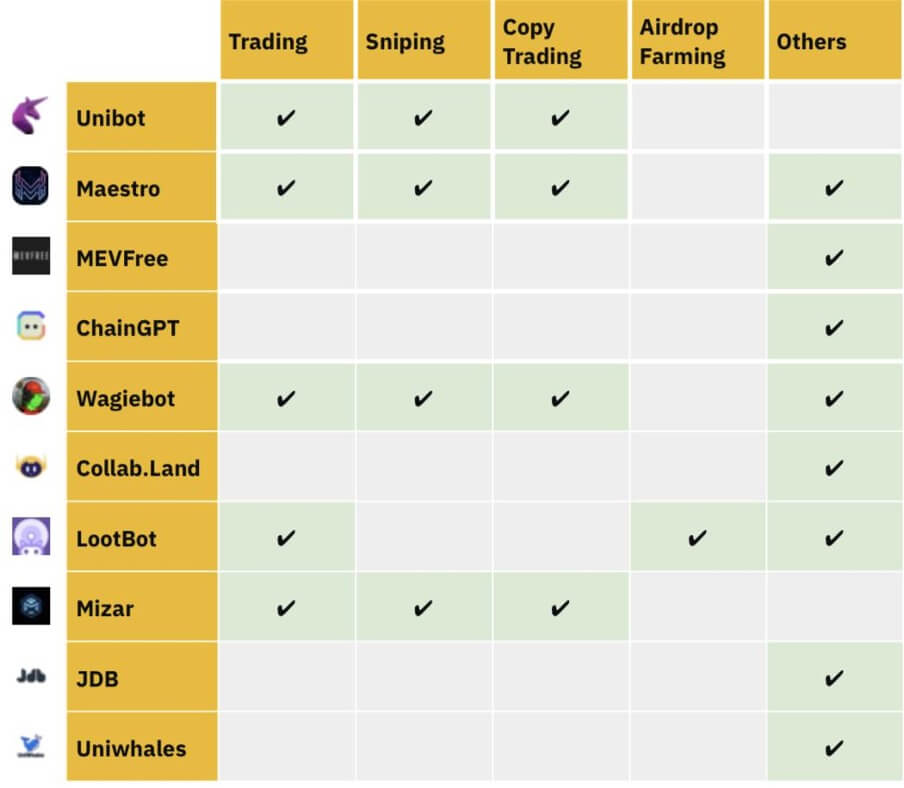
The following comparison highlights the structural differences between leading bots. This is not a ranking of popularity, but a breakdown of technical fit.
| Bot | Primary Chain | Latency | Fee Model |
|---|---|---|---|
| Trojan | Solana | Sub-second | Percentage per trade |
| BONKbot | Solana | Sub-second | Percentage per trade |
| Maestro | Ethereum | Seconds to minutes | Subscription + Percentage |
| Banana Gun | Ethereum | Seconds to minutes | Percentage per trade |
Select based on risk tolerance
If you are trading on Solana, latency is your primary defense against slippage and sandwich attacks. Bots like Trojan and BONKbot are built specifically for this environment, offering direct RPC connections that bypass public mempool delays. For Ethereum, the complexity lies in gas optimization and contract interaction. Maestro and Banana Gun dominate here by managing complex gas strategies and MEV protection.
Your risk tolerance should dictate your fee structure. Percentage-based fees align the bot's incentives with your volume, while subscription models may offer lower per-trade costs for high-frequency traders. Always verify the bot's security audit status and community reputation before funding an account.
Secure your infrastructure
A trading bot is only as secure as the private keys it manages. Never store your seed phrase or private key in plain text on your device. Use a hardware wallet for long-term storage and interact with the bot through a dedicated, air-gapped device if possible.


As an Amazon Associate, we may earn from qualifying purchases.
Set up private RPC endpoints
Public RPC endpoints are the bottleneck for high-frequency trading. They are shared resources subject to rate limits, throttling, and unpredictable latency spikes. When your bot attempts to execute a trade during market volatility, a public node might reject your request or delay it by seconds—time you do not have. For a Telegram trading bot, execution speed is the difference between profit and loss.
Private RPC endpoints provide a dedicated connection to the blockchain network. This infrastructure ensures consistent low-latency responses, allowing your bot to submit transactions faster than competitors relying on shared nodes. Providers like QuickNode and Helius offer specialized endpoints optimized for speed and reliability, which are essential for maintaining a competitive edge in DeFi.
Evaluate providers based on their specific blockchain support and latency guarantees. QuickNode offers multi-chain support with customizable nodes, while Helius is optimized for Solana performance. Select the provider that aligns with your target chain and offers the SLA (Service Level Agreement) necessary for high-frequency operations.
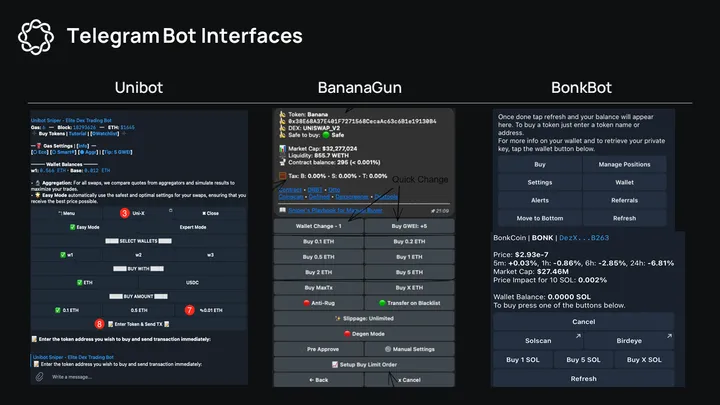
Create an account and provision a dedicated endpoint. Ensure you configure the node for high throughput, enabling features like websockets for real-time event listening. This step moves your traffic away from public pools to a private lane, reducing contention and improving response times.

Update your bot's configuration file with the new private RPC URL and authentication key. Replace any existing public endpoints. Verify the connection by polling the node for the latest block number. A successful response confirms your bot is now communicating directly with the optimized infrastructure.
Configure gas and slippage limits
In DeFi, your bot is a high-speed vehicle on a road built by strangers. If you don't set strict limits on how much you pay for speed (gas) and how much price movement you tolerate (slippage), you will pay for mistakes. These two parameters are your primary defense against failed transactions and front-running attacks.
Set dynamic gas priority fees
Static gas fees are a common failure point. During network congestion, a fixed fee becomes too low, causing your bot's transactions to hang or fail while the market moves. Instead, configure your bot to fetch current gas prices from a reliable source like QuickNode or Coinbase.
Set a maximum cap for gas fees. This ensures that even during a "meme coin frenzy" or a major network event, your bot won't spend more on transaction fees than the value of the trade itself. This cap protects your capital from being eroded by excessive network demand.
Define slippage tolerance
Slippage is the difference between the expected price of a trade and the price at which the trade is actually executed. In fast-moving markets, especially on Solana or Ethereum, prices can shift in milliseconds. For most tokens, a slippage tolerance of 1% to 2% is safe. However, for highly volatile assets or low-liquidity tokens, you may need to increase this to 5% or higher to ensure the transaction goes through. Conversely, setting it too high exposes you to "sandwich attacks," where malicious actors detect your trade and buy ahead of you to drive the price up.
Test with small amounts
Before deploying your bot with significant capital, run a test sequence. Send small amounts of tokens to verify that your gas and slippage settings work correctly under different network conditions. This step is critical for identifying edge cases where your bot might behave unexpectedly.
By carefully configuring these parameters, you ensure your bot operates efficiently and securely, minimizing the risk of costly errors in the high-stakes environment of DeFi trading.
Secure your private keys and approvals
Your bot’s wallet is the front door to your capital. If you leave it wide open, you’re not just risking a bug—you’re risking a drain. Securing your Telegram trading bot infrastructure comes down to two things: controlling who has access to your keys and limiting what those keys can do on-chain.
1. Use burner wallets for active trading
Never run your bot with your primary holdings. Treat your trading wallet as a "burner"—a disposable identity that holds only the amount you’re willing to lose. If the bot gets compromised or you make a bad configuration error, the damage is capped. Move profits back to cold storage regularly; think of this as your savings account, not your checking account.
2. Revoke unnecessary token approvals
When you interact with a DEX via your bot, you grant it permission to spend your tokens. Many bots leave these approvals active indefinitely. If the bot’s backend is hacked, the attacker can drain any token with an open approval. Use a revocation tool like RevokeCash to regularly audit and clear permissions for tokens you aren’t currently trading. This is a non-negotiable hygiene step for any bot user.
3. Isolate your API keys
Your Telegram bot token and your node RPC key are your master keys. Store them in environment variables, never in your codebase or commit history. If you’re using a service like Privy for wallet integration, ensure you’re following their security recipes for key management. Treat these keys like passwords: unique, complex, and never shared in public channels or logs.
4. Start small and test thoroughly
Before you deploy with significant capital, run a "dry run" with minimal amounts. Test the bot’s response to market volatility, network congestion, and error states. As community advice often highlights, triple-check your approvals and never leave large funds in a bot’s wallet during the testing phase. Small tests reveal big flaws before they become expensive mistakes.
Test with small amounts first
Before you connect your main treasury or high-value wallet, treat your Telegram trading bot like a new engine: you need to run it in neutral before hitting the gas. The stakes in DeFi are unforgiving, and a single misconfigured RPC endpoint or a sneaky malicious approval can drain your funds instantly. This validation step is your insurance policy against catastrophic errors.
Start by sending a minimal amount of capital—just enough to cover the transaction fees and a small trade size. This allows you to verify the entire loop: from the bot receiving the signal, to signing the transaction on-chain, to the final execution in your wallet. If the bot fails here, the loss is negligible. If it succeeds, you have proof that your infrastructure is communicating correctly with the blockchain.
While testing, triple-check your wallet permissions. Community advice from experienced Solana and Ethereum users consistently warns against leaving large funds in a bot’s associated wallet or granting unlimited token approvals. Use this small-scale test to revoke any unnecessary permissions and ensure your private keys remain secure. Only after you’ve confirmed the bot executes trades accurately and securely should you consider scaling up your position.
Common questions about bot infrastructure
Building infrastructure for Telegram trading bots requires balancing speed with security. Users often worry about the safety of their funds and the hidden costs of running automated systems. Understanding these mechanics helps you avoid common pitfalls and manage risk effectively.
No comments yet. Be the first to share your thoughts!