Market size and revenue trends
The telegram trading bots market research landscape is defined by explosive growth, driven largely by the viral nature of meme coins and the low barrier to entry for retail traders. While the broader cryptocurrency market fluctuates, the infrastructure supporting social trading on Telegram has carved out a distinct and lucrative niche. The ecosystem is no longer just a collection of experimental scripts; it is a multi-million dollar industry competing for market share in an increasingly crowded space.
Recent data from market trackers indicates that total revenue captured by Telegram bots has surpassed US$28.7 million. This figure is significant not just for its absolute value, but for the velocity at which it was accumulated. The surge is directly correlated with skyrocketing token prices and the volume of trades executed through these automated interfaces. As users flock to platforms like Telegram for speed and community, the financial engines powering those interactions have grown substantially in tandem.
This revenue spike highlights a shift in how retail participants interact with digital assets. The barrier to entry has lowered, allowing non-technical users to execute complex trades with a single command. However, this growth also underscores the speculative nature of the current market. Much of the revenue is tied to high-volatility assets, meaning the market's stability is closely linked to the broader crypto sentiment. For anyone conducting telegram trading bots market research, understanding this dependency is crucial for assessing long-term viability versus short-term hype.
Market leaders by trading volume
When conducting telegram trading bots market research, the most reliable way to gauge a tool's legitimacy is to look at the money flowing through it. Lifetime trading volume serves as the primary indicator of user trust and infrastructure stability. While marketing claims vary, on-chain data and third-party trackers point to a clear hierarchy of dominance.
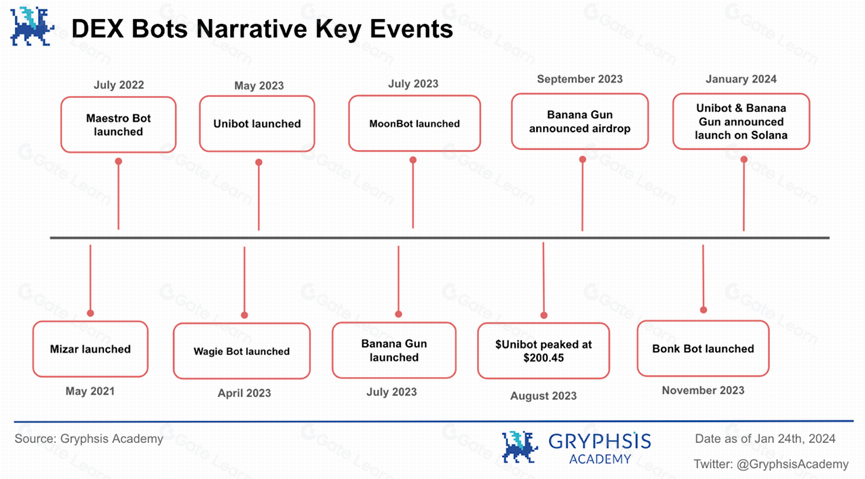
Trojan, BONKbot, Maestro, and Banana Gun consistently rank at the top of volume charts. These platforms have built significant moats through speed and reliability, which are critical in high-stakes environments. Maestro and Unibot, in particular, are often cited as commanding a substantial portion of the overall market share, with some estimates suggesting they handle over 75% of bot-mediated activity on certain chains.
To understand the competitive landscape, it helps to compare these tools side-by-side. The table below outlines the key differences in supported ecosystems and core features among the leading contenders.
| Bot | Primary Chains | Key Feature |
|---|---|---|
| Trojan | Solana | Anti-rug and copy trading |
| BONKbot | Solana | Low-latency execution |
| Maestro | ETH, BSC, Solana | Multi-chain dashboard |
| Banana Gun | ETH, BSC | MEV protection |
| Unibot | ETH, BSC | P2E integration |
The choice between these bots often comes down to which blockchain you are trading on. For Solana-based meme coins, Trojan and BONKbot offer the fastest execution speeds. For Ethereum and BSC, Maestro and Banana Gun provide more robust security features against front-running bots.
Execution speed and RPC requirements
When you are trading on-chain, milliseconds are the difference between a profit and a rug pull. Telegram trading bots market research reveals that speed is not just about the bot's code; it is about the infrastructure that delivers that code to the blockchain. The bottleneck is rarely the user interface—it is the RPC (Remote Procedure Call) endpoint.
An RPC endpoint acts as the bridge between your bot and the blockchain. When you send a transaction, your bot sends a request to this endpoint, which then relays it to the network. If you are using a free, public RPC, you are sharing that lane with thousands of other users. During high volatility, these public endpoints become congested, causing delays that can cost you the entire opportunity. For sniping new tokens, a slow RPC is like showing up to a race with a flat tire. You might still finish, but you will not be winning.
Professional traders and serious bot operators use paid, dedicated RPC providers like QuickNode or Alchemy. These services offer "private nodes" or "high-throughput" tiers that guarantee faster block inclusion and higher reliability. They often include features like pre-signed transactions or direct mempool access, which allow bots to bypass the public queue and get their trades confirmed before others even see the token launch.
The cost of this infrastructure is part of the operational overhead of running a trading bot. While it adds to the expense, the ability to execute trades in the same block as the liquidity add is non-negotiable for strategies that rely on speed. Without it, you are essentially gambling on network luck rather than strategy.
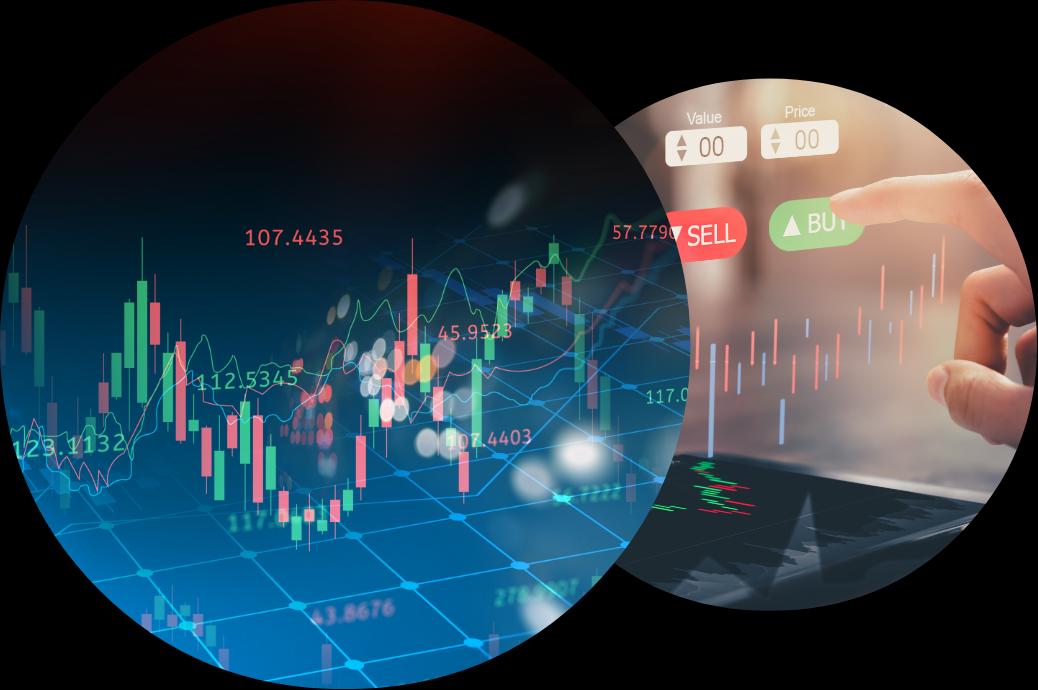
The chart above shows the volatility of a high-volume asset like Solana. Notice the sharp spikes in volume and price. These are the moments when execution speed matters most. A standard public RPC might take several seconds to confirm a transaction during these spikes, while a dedicated node can often submit and confirm in under a second. This latency gap is why infrastructure is the hidden hero of any successful trading bot.
Security risks and key management
Connecting a cryptocurrency wallet to a Telegram trading bot introduces significant attack vectors that go beyond standard phishing. When you authorize a bot, you are often granting it permission to sign transactions on your behalf. This infrastructure shift means you are no longer the sole signer of your assets; you are delegating trust to a third-party script running on a centralized messaging platform.
The primary vulnerability lies in the API keys and private key management. Many bots require you to input a private key or an API key with trading permissions directly into the chat interface. If the bot’s backend is compromised, or if the developers themselves are malicious, those credentials can be exfiltrated instantly. Unlike a hardware wallet where keys never leave the device, a Telegram bot operates in a cloud-based environment where your signing authority is exposed to potential server-side breaches.
Warning: Never use your main treasury or high-value wallet with a telegram trading bot. Use a burner wallet with limited permissions.
Even if a bot claims to use "non-custodial" methods, the interface often requests excessive token allowances. A malicious contract can drain not just your trading pair tokens, but any ERC-20 tokens you hold, by exploiting unlimited approval settings. Always review the exact permissions you are granting. If a bot asks for full access to your NFTs or stablecoins for a simple trade, disconnect immediately.
The Telegram trading bots market research indicates that while convenience drives adoption, security hygiene is often overlooked. Users frequently reuse addresses across multiple bots, creating a single point of failure. If one bot is compromised, attackers can use transaction graph analysis to trace your activity across other platforms, potentially leading to broader portfolio targeting. Treat every bot connection as a temporary, isolated session, not a permanent integration.
Checklist for safe bot adoption
Integrating a Telegram trading bot into your workflow requires more than just finding the right tool. It demands a strict security protocol to protect your capital from smart contract vulnerabilities and API leaks. Use this five-step checklist to vet any bot before connecting your wallet.
Never trust a bot blindly. Verify the underlying smart contract on a block explorer like Etherscan or Solscan. Check for verified source code and ensure the contract ownership is renounced or held by a multi-sig wallet. If the code is unverified, assume it contains hidden backdoors.
Scammers frequently clone popular Telegram bot channels. Always cross-reference the bot’s handle with its official website or GitHub repository. Look for the blue verification badge, but remember that verification can sometimes be bypassed or faked. Stick to bots recommended by reputable market trackers like CoinGecko.
Isolate your trading activity. Never connect your primary holding wallet to a Telegram bot. Create a dedicated "burner" wallet with only the funds you intend to trade. If the bot is compromised or executes a malicious transaction, your main assets remain untouched.
Most bots request unlimited approval to spend your tokens. This is a critical risk. Immediately revoke unlimited allowances after your first trade. Configure the bot to use only the specific token amounts you need for trading, ensuring it cannot drain your entire balance in a single exploit.
Before scaling up, execute a series of small test trades. Verify that the bot correctly places orders, calculates slippage, and handles failures. Monitor the transaction history on-chain to ensure the bot is interacting with the correct contract addresses.
Security is an ongoing process. Regularly audit your token approvals and rotate your burner wallet addresses if you suspect any unusual activity. This disciplined approach to bot adoption is essential for long-term safety in the volatile Telegram trading bots market research landscape.
No comments yet. Be the first to share your thoughts!