How Telegram bots execute trades
When you type a command into a Telegram trading bot, you aren’t actually trading inside Telegram. You are using the app as a remote control. The bot acts as an intermediary, translating your text input into a transaction that gets sent directly to a decentralized exchange (DEX).
The execution happens on the blockchain, not in the chat window. Your bot connects to a blockchain node via an RPC (Remote Procedure Call) endpoint. This connection allows the bot to submit your swap instructions to the network. Because these bots often use premium, high-speed RPC nodes, they can broadcast transactions faster than a standard user interacting with a DEX interface through a browser wallet.


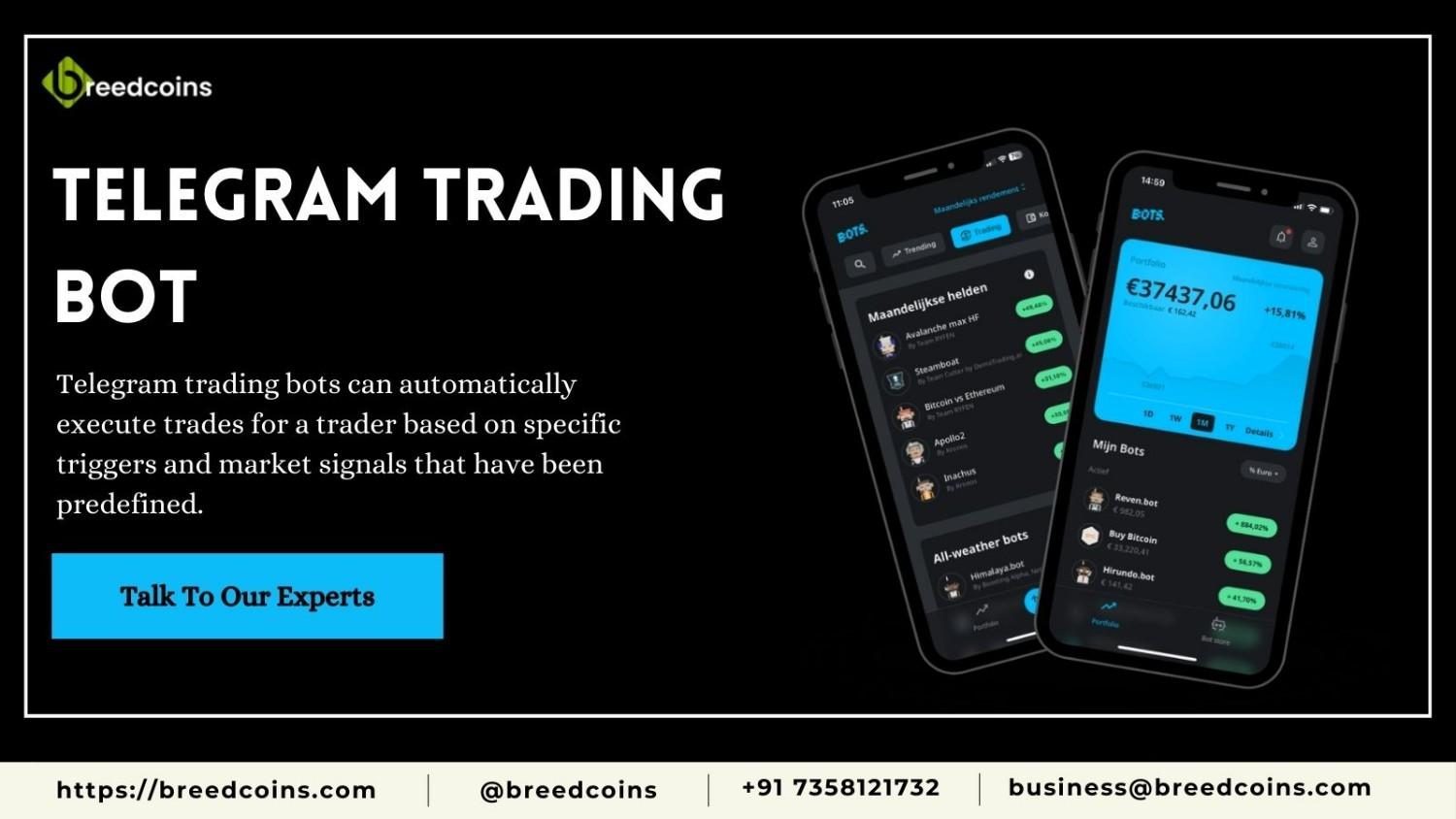
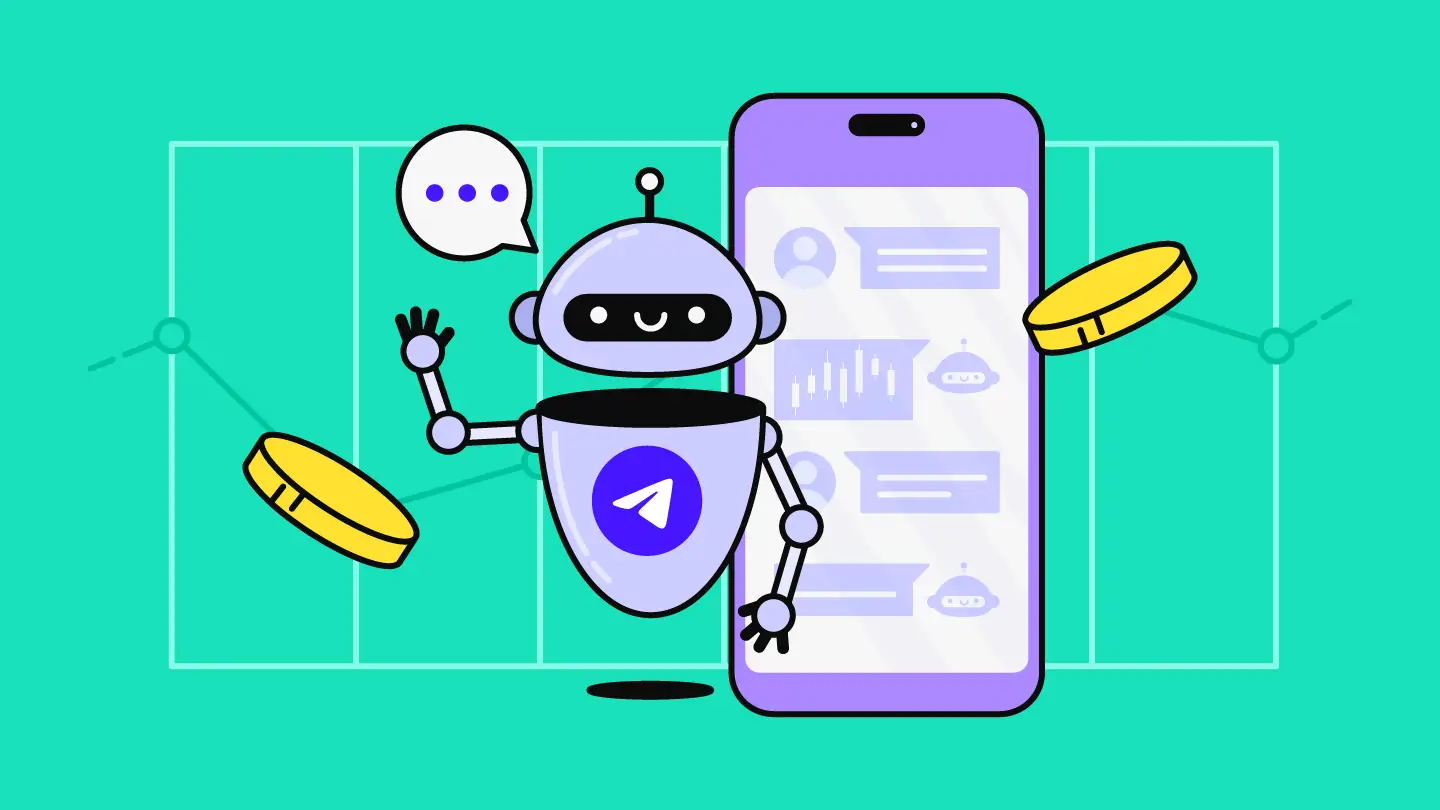
This architecture explains why speed and slippage settings are critical. Since the bot is competing with other automated scripts for block space, the mechanics of how it prioritizes and submits these RPC calls directly impact your fill price and success rate.

TechnicalChart symbol="BINANCE:SOLUSDT" chartStyle="candle" interval="1D" indicators='["volume"]' />
Top Telegram Trading Bots for Speed and Reliability
Choosing the right Telegram trading bot comes down to three hard metrics: uptime, execution speed, and fee structure. In a market where milliseconds determine profit or loss, relying on unverified influencer claims is risky. The data from CoinGecko’s lifetime volume analysis points to five bots that consistently handle the load: Trojan, BONKbot, Maestro, Banana Gun, and SolTradingBot.
These platforms differ significantly in their underlying mechanics. Some prioritize raw sniping speed for memecoins, while others focus on copy-trading reliability for established tokens. Below is a side-by-side comparison of how these leaders handle chain support, fee structures, and key features.
| Bot | Primary Chains | Fee Structure | Key Features |
|---|---|---|---|
| Trojan | Solana, Base | 0.75% (tiered) | Sniping, Copy Trading, Limit Orders |
| BONKbot | Solana | 0.5% - 1% | Ultra-low latency, Simple UI |
| Maestro | Multi-chain (ETH, BSC, Solana) | 0.5% - 1% | Advanced DCA, Grid Trading |
| Banana Gun | EVM Chains (ETH, BSC, Base) | 0.5% - 1% | Anti-rug, Fast Sniping |
| SolTradingBot | Solana | 0.5% | Copy Trading, Token Sniping |
While the table above provides a quick overview, the choice often depends on which chain you trade most frequently. Trojan and BONKbot dominate the Solana ecosystem due to their optimized RPC connections, which reduce slippage during high volatility. Maestro and Banana Gun offer broader multi-chain support, making them suitable for traders who move capital across Ethereum, Base, and BSC.
Chart: SOL/USDT 1-day view with volume indicators. Trading bots perform best when liquidity is high, as shown by the volume spikes.
Regardless of the bot you choose, always verify the fee structure before committing significant capital. Many bots charge a percentage of every trade, which can eat into profits on high-frequency strategies. Additionally, check if the bot requires a private key deposit or if it uses a safer wallet-signing mechanism. For real-time market context, monitor the price of the asset you are trading to avoid entering positions during extreme volatility.
Fee structures and hidden costs
Using a Telegram trading bot is rarely free, and the costs can add up quickly if you don't understand where your money is going. When you execute a trade, you are paying three distinct layers of fees: the exchange's trading fee, the network's gas fee, and the bot's own service charge.
Trading and Network Fees
Every swap on a decentralized exchange (DEX) requires a trading fee, typically ranging from 0.1% to 0.3% of the transaction value. This goes to the liquidity providers. On top of that, you must pay gas fees to the blockchain network. These fees fluctuate based on network congestion. If you are trading on high-traffic chains like Ethereum, gas fees can sometimes exceed the cost of the trade itself during peak hours. Telegram bots often simplify this by batching requests, but you still pay the underlying network cost.
Bot Service Charges
Most Telegram bots operate on a subscription model or take a percentage of your profits. Free bots may exist, but they often lack the speed or reliability needed for serious trading. Premium bots might charge a flat monthly fee or a small cut of your gains. Always check the bot's documentation to see if they extract value from your trades in ways beyond the stated fee, such as through MEV (Maximal Extractable Value) extraction. This is where searchers reorder your transaction to profit at your expense, a hidden cost that can erode your margins.
Slippage and Price Impact
Slippage is another hidden cost. If you place a large order, the price may shift before your trade executes, resulting in a worse entry or exit price. Telegram bots allow you to set slippage tolerance, but setting it too high exposes you to front-running. Setting it too low means your trade fails, and you still pay the gas fee for the failed attempt. Understanding these mechanics helps you manage expectations and avoid unexpected losses.
Security risks and wallet hygiene
Connecting a wallet to a Telegram trading bot is the highest-risk action in your DeFi workflow. You are effectively granting a third-party script permission to move your assets. Unlike a centralized exchange, there is no customer support team to reverse a transaction or freeze a compromised account. Once you approve a contract, you are on your own.
The most critical defense is using a dedicated burner wallet. Never connect your primary savings or long-term holdings to a bot. Fund the burner wallet with only the amount you intend to trade for the day. If the bot is compromised or the contract contains a malicious backdoor, your loss is capped at that specific balance. This isolation prevents a single bad interaction from draining your entire portfolio.
When configuring permissions, strict hygiene is non-negotiable. Most bots ask for "unlimited" approval of tokens like USDT or USDC to enable smooth trading without constant re-signing. This is a common vector for exploits. If you must use unlimited approval, understand that the bot contract can drain those tokens at any time. A safer alternative is to manually revoke permissions after each trading session using a tool like Revoke.cash, or to use bots that support temporary, limited approvals.
Never share your private key, seed phrase, or mnemonic with anyone or any bot. Legitimate trading bots only require your public wallet address and an API key for execution. Any service asking for your seed phrase is a scam designed to steal your funds immediately. Keep your keys offline and your interactions limited to verified, audited contracts.
Setting up your first bot safely
Launching a Telegram trading bot is fast, but misconfiguring it is equally fast. The difference between a successful trade and a drained wallet usually comes down to three mechanics: how you connect, how you pay, and how you protect your capital. Treat this setup like locking a door, not just opening it.
Never connect your main savings or long-term holdings to a trading bot. Create a fresh, empty wallet specifically for bot activity. If the bot is compromised or a smart contract is malicious, you only lose what is in that isolated account. This is your primary firewall.

When you generate API keys from your exchange (like Coinbase or Binance), select the strictest permissions possible. You typically only need "Read" and "Trade" (spot/market) permissions. Never grant "Withdraw" access. If a bot asks for withdrawal rights, it is likely a scam or poorly designed security practice.
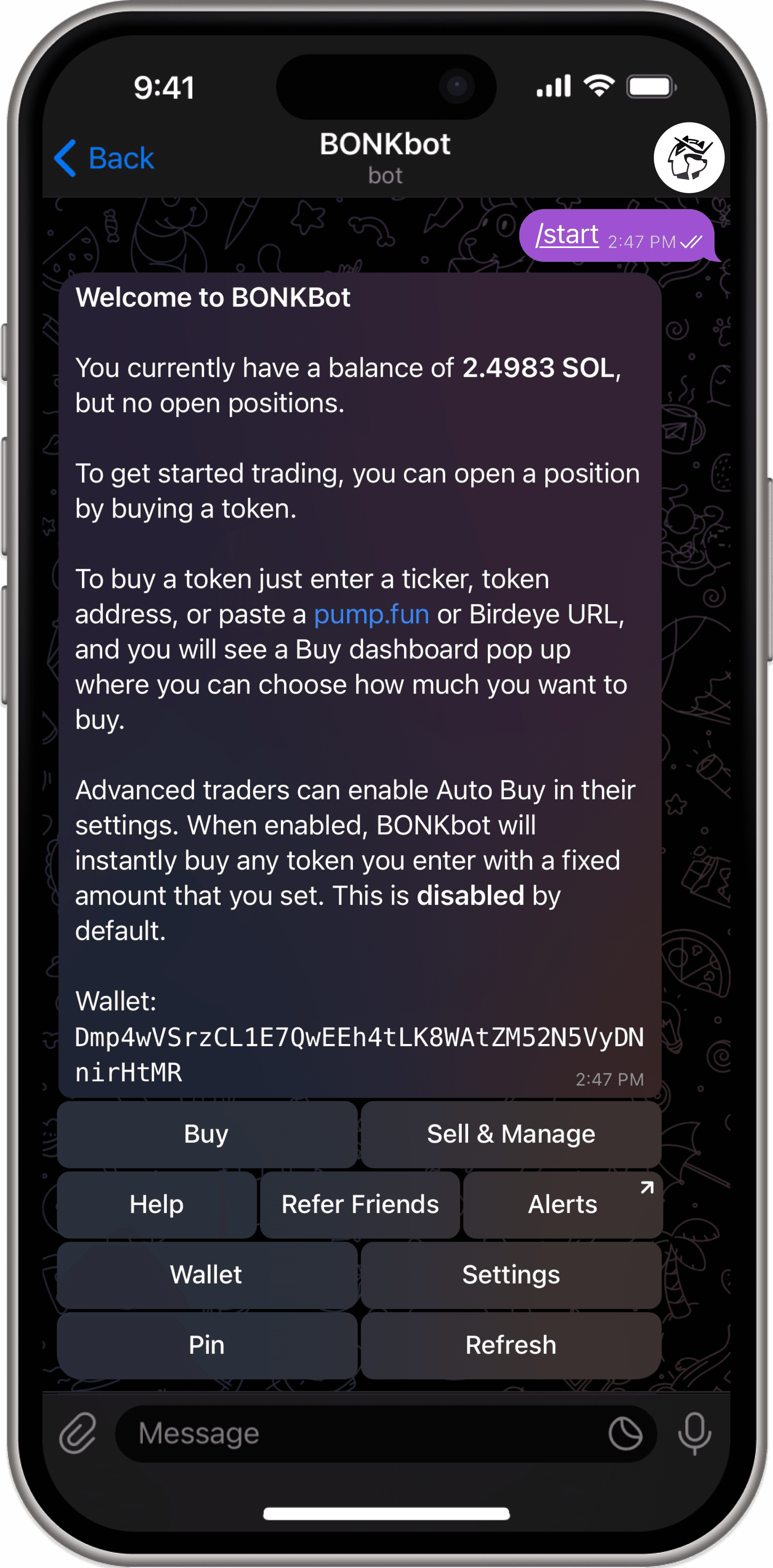
Slippage tolerance determines how much the price can move against you before the trade fails. For volatile meme coins, set slippage higher (e.g., 10-20%) to ensure execution, but be aware this increases the risk of paying too much. For stable, liquid assets, keep slippage low (1-2%) to avoid overpaying. Always check the gas fees and bot service fees before confirming your first trade.
Before committing significant capital, execute a trade with the smallest possible amount (e.g., $1 or 0.001 ETH). This confirms that your API keys work, the bot can read the market, and the funds actually arrive in your wallet. If this step fails, do not proceed.
Keep an eye on the asset you are trading. Use a live chart to understand the current volatility. Sudden price spikes can cause your bot to execute trades at unfavorable prices if your slippage settings are too loose.
The goal here is control, not automation. By isolating your funds and verifying every permission, you ensure that the bot remains a tool you command, not a liability you manage.
Common questions about bot trading
Telegram trading bots are tools that automate execution on decentralized exchanges (DEXs) through chat commands. They are not magic money printers; they are high-speed interfaces that execute your logic. If you lack an edge in your strategy, speed alone will not save you from losses.
Do Telegram trading bots actually work?
Yes, but they function as execution engines, not prediction models. They connect your wallet to a blockchain via an RPC node, allowing you to buy, sell, or set stop-losses instantly. The bot removes the friction of navigating a DEX interface, but it does not analyze market sentiment. You are still responsible for deciding what to trade. The risk is that a bug in the bot or a failed transaction can still result in loss.
Which Telegram trading bot is best?
There is no single "best" bot because the right choice depends on your target network. Bots like Trojan and Bonkbot are optimized for Solana, while Maestro and Banana Gun often support multi-chain environments like Ethereum and BSC. Look for bots with high lifetime trading volume and active community support. Avoid bots that require excessive permissions or have no transparent fee structure.
What are the top 5 bots in Telegram?
Based on lifetime trading volume, the leading bots are Trojan, BONKbot, Maestro, Banana Gun, and SolTradingBot. These platforms have survived multiple market cycles, suggesting a degree of reliability and liquidity. However, volume does not guarantee safety. Always verify the bot's current status and community feedback before depositing funds or connecting your private keys.
Which Telegram bot gives real money?
No legitimate bot "gives" you money. Any service claiming to generate passive income through a Telegram bot is likely a scam. Bots facilitate trades; they do not create value. If a bot promises guaranteed returns, it is designed to steal your funds. Focus on bots that provide transparent fee structures and secure key management rather than unrealistic profit claims.
No comments yet. Be the first to share your thoughts!