How Telegram bots execute trades
When you type a command in a Telegram trading bot, the interface you see is just the front end. The actual work happens in the background, where the bot acts as a direct bridge between your intent and the blockchain. Instead of routing your trade through a standard Decentralized Exchange (DEX) interface like Uniswap or Jupiter, which adds layers of latency, the bot constructs the transaction data locally and sends it directly to the network.
This speed advantage comes from how the bot interacts with RPC (Remote Procedure Call) nodes. Standard web interfaces often rely on public, shared RPC endpoints that can be slow or rate-limited. High-performance bots, however, typically connect to private, high-throughput RPC nodes or use dedicated infrastructure providers. This direct line allows the bot to broadcast transactions to the mempool—the waiting area for unconfirmed transactions—much faster than a user clicking "Swap" on a website.
The technical mechanism involves three main steps. First, the bot parses your command (like buy 1 SOL) and fetches the latest token contract address and liquidity pool data. Second, it constructs the raw transaction payload, including the exact amount of slippage tolerance and gas price you’ve set. Finally, it broadcasts this payload to the blockchain. By bypassing the graphical interface and the associated network hops, the bot reduces the time between your decision and the transaction submission.
To understand the impact of this infrastructure on trading performance, it helps to look at market volatility. Rapid price movements can render a trade invalid if the execution is delayed. The following chart illustrates the volatility context in which speed becomes critical.
This direct-to-node approach is why bots can often secure trades in the same block as the price movement you’re reacting to. While standard users might wait for confirmation in the next block or face higher slippage due to slower execution, the bot’s optimized RPC connection minimizes this gap. It’s not magic; it’s just a more efficient pipeline for getting your signed transaction onto the ledger before the market moves on.
Top telegram bots for 2026
The Telegram trading bot market has consolidated around four primary infrastructure players: Trojan, BONKbot, Maestro, and Banana Gun. While dozens of new interfaces appear weekly, these four command the majority of lifetime trading volume and maintain the most stable execution engines. Choosing between them depends less on user interface preferences and more on chain support, fee structures, and specific execution needs like sniping or copy trading.
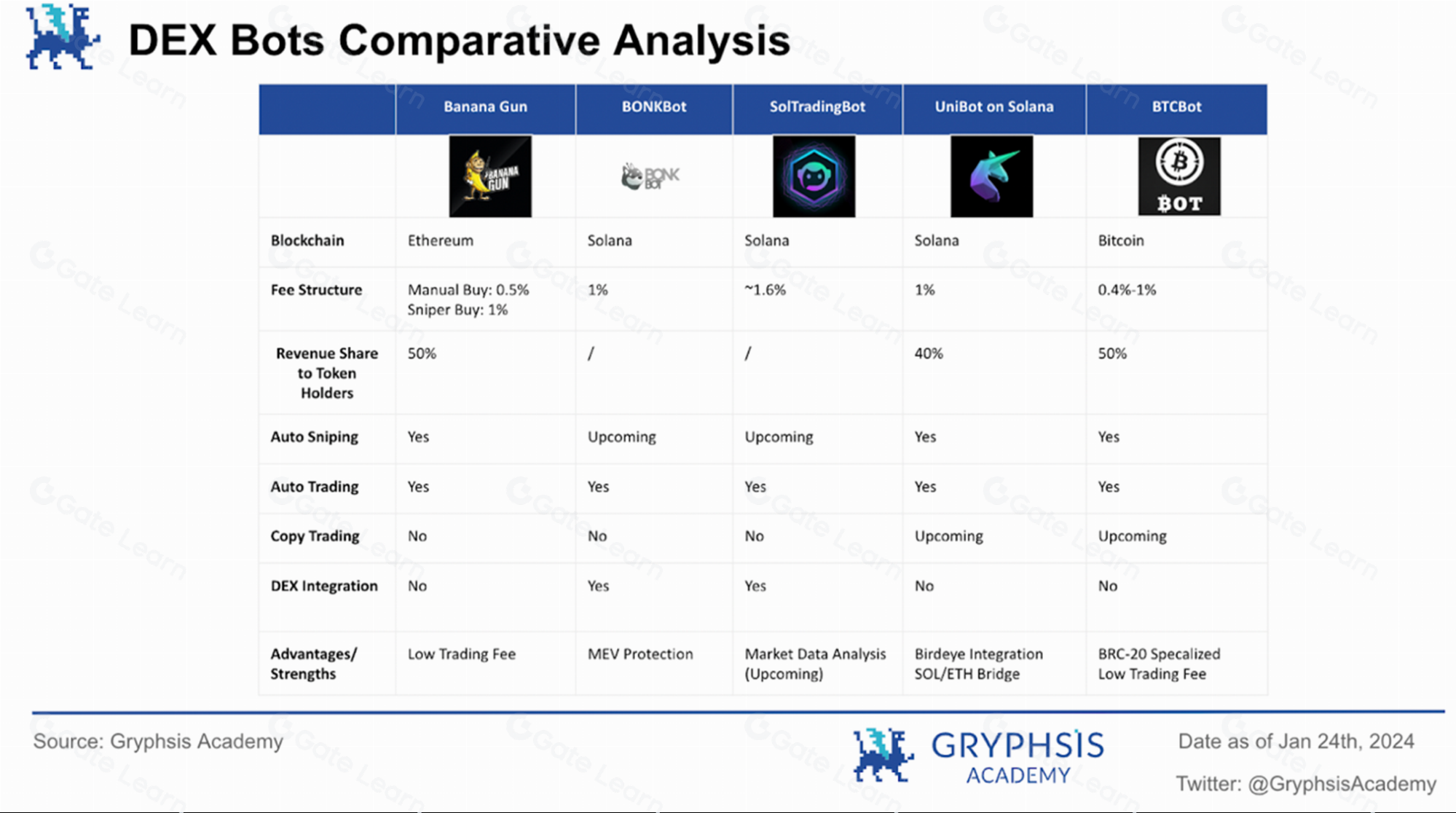
Trojan and BONKbot have emerged as the dominant Solana-native options due to their low latency and high reliability during peak volatility. Maestro offers a more comprehensive cross-chain solution, while Banana Gun remains a favorite for advanced sniping strategies. The table below compares their core infrastructure differences.
| Feature | Trojan | BONKbot | Maestro | Banana Gun |
|---|---|---|---|---|
| Primary Chain | Solana | Solana | Multi-chain | Multi-chain |
| Sniping | Yes | Yes | Yes | Advanced |
| Copy Trading | Yes | No | Yes | Yes |
| Fee Model | ~1% | ~1% | Tiered | ~1-2% |
| Reliability | High | High | Medium | Medium |
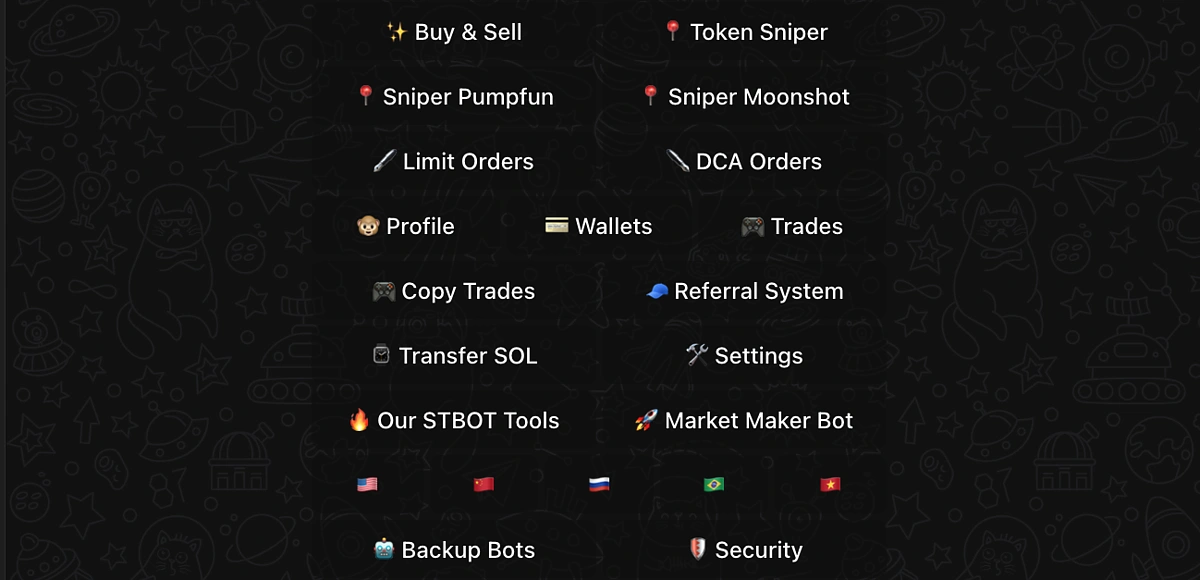
Trojan is often the default choice for Solana traders because its interface balances speed with clarity. It supports copy trading, allowing users to mirror high-performing wallets, which is critical for tracking smart money in real-time. BONKbot is nearly identical in infrastructure but is preferred by users who want a lighter, faster execution engine with minimal menu overhead. Both bots process transactions faster than most centralized exchanges during high-volume periods.
Maestro’s strength lies in its multi-chain architecture. If you trade across Ethereum, BSC, and Solana, Maestro provides a single unified dashboard. However, this versatility comes with a slightly steeper learning curve and tiered fee structures that can increase costs for high-frequency traders. Banana Gun offers the most advanced sniping capabilities, including auto-buy settings for new token launches, but its interface is less intuitive for beginners.
The choice between these bots often comes down to your specific trading style. If you are focused on Solana memecoins, Trojan or BONKbot will provide the fastest execution. For broader market coverage, Maestro’s cross-chain features justify the complexity. Banana Gun remains the specialist tool for those prioritizing sniping precision over ease of use.


As an Amazon Associate, we may earn from qualifying purchases.
While bots handle execution, securing your assets remains essential. A hardware wallet provides an offline layer of security for your long-term holdings, keeping them separate from the active trading environment. A reliable USB-C hub ensures your multi-monitor trading setup runs smoothly without latency, which is critical when managing multiple bots simultaneously. A monitor stand helps organize your workspace, reducing eye strain during long trading sessions.
Setting up your trading environment
Building a Telegram trading bot requires a clear separation between your communication interface and your execution engine. The goal is to create a secure, automated workflow that can react to market signals without exposing your private keys or compromising your exchange accounts. In 2026, the infrastructure is more standardized, but the security risks remain high if you skip the basics. We will walk through the three essential phases: creating the bot identity, securing the API credentials, and connecting to your wallet safely.
Start by creating your bot on Telegram. Open your chat with @BotFather and send the /newbot command. You will be prompted to choose a display name and a unique username that ends in bot. Once created, BotFather will provide you with an API token. This token is the key to controlling your bot; treat it like a password. Store it in a secure environment variable on your server, never hardcode it in your source code, and never share it in public channels. If you suspect the token has been compromised, use the /revoke command in BotFather to generate a new one immediately.
Next, obtain API keys from your chosen cryptocurrency exchange. Most major platforms allow you to generate keys with specific permissions. For a trading bot, you typically need "read" access to check balances and market data, and "trade" access to execute orders. Crucially, disable "withdrawal" permissions. This ensures that even if your bot is hacked or malfunctions, the attacker cannot move your funds out of the exchange. Many developers also recommend using a dedicated sub-account for the bot rather than your main exchange account to further isolate risk.

If you are trading on decentralized exchanges (DEX) or managing on-chain assets, you need to connect a wallet. Never input your private key directly into a Telegram bot interface. Instead, use a wallet abstraction layer or a dedicated signing service that supports secure key management. For on-chain trading bots, consider using a multi-signature wallet or a smart contract account where the bot controls only specific, limited functions. This approach keeps your primary assets safe while allowing the bot to execute trades within defined parameters. Always test this connection with a small amount of capital first to ensure the signing process works as expected.
Once your environment is set up, you need to monitor the market conditions your bot will operate in. Use the widget below to track the price action of the assets you plan to trade. This helps you calibrate your bot's parameters to current volatility levels.
Execution strategies and risk
Advanced execution in 2026 Telegram trading requires more than just speed; it demands precise order management. Most bots support limit orders, allowing you to buy at a specific price rather than the current market rate. This is essential for avoiding overpaying during sudden pumps. However, limit orders carry their own risk: if the price moves too fast, your order may never fill, leaving you on the sidelines.
Slippage tolerance is your primary defense against bad fills. Setting a tight slippage tolerance (e.g., 1-2%) protects you from significant price impact on low-liquidity tokens. Conversely, a high tolerance increases the chance of front-running by MEV (Miner Extractable Value) bots. These bots detect your transaction in the mempool and insert their own trades ahead of yours, ensuring they get a better price while you receive fewer tokens. Telegram bots often lack the sophisticated private RPC connections needed to bypass this, making you vulnerable.
Stop-losses are critical for capital preservation. While many bots offer auto-sell features, they are not foolproof. In extreme volatility, your stop-loss may execute at a much lower price than intended due to slippage or network congestion. Always test these settings with small amounts first.
To understand the current market volatility that impacts these strategies, you can monitor real-time price action.
Telegram Trading Bot FAQs
Do Telegram trading bots actually work?
Yes, but they function as execution tools, not magic profit generators. They automate order placement on decentralized exchanges (DEXs) via API keys, reducing latency to milliseconds. This speed is critical for sniping new token launches or reacting to volatility. However, the bot cannot predict market direction; it only executes your strategy faster than manual clicking. If your strategy is flawed, the bot will simply lose money faster.
Which Telegram trading bot is best?
The "best" bot depends on your primary chain and risk tolerance. For Ethereum and Solana, BonkBot and Maestro are widely used for their reliability and interface. For multi-chain users, Unibot offers broader compatibility. There is no single winner. Choose based on the specific chain you trade and whether you need advanced features like limit orders or copy-trading. Always verify the bot’s current uptime and community support before depositing funds.
What are the top 5 bots in Telegram?
- BonkBot: Top choice for Solana due to low latency and simple interface.
- Maestro: Supports multiple chains with advanced charting and copy-trading.
- Unibot: Known for multi-chain support and early access to new features.
- Trojan: Popular for its user-friendly design and robust anti-rug features.
- PiggyBak: Focuses on safe trading with built-in stop-losses and take-profits.
Note: Rankings shift frequently based on security audits and feature updates. Always check the latest community feedback.
Which Telegram bot gives real money?
No legitimate bot gives you "free" money. Any bot promising guaranteed returns or passive income without effort is likely a scam. These services often require you to send funds to a wallet that then drains your assets. Real trading bots require you to provide your own capital and strategy. They execute trades you authorize, but they do not generate profit from thin air. Treat them as tools for execution, not sources of income.
No comments yet. Be the first to share your thoughts!